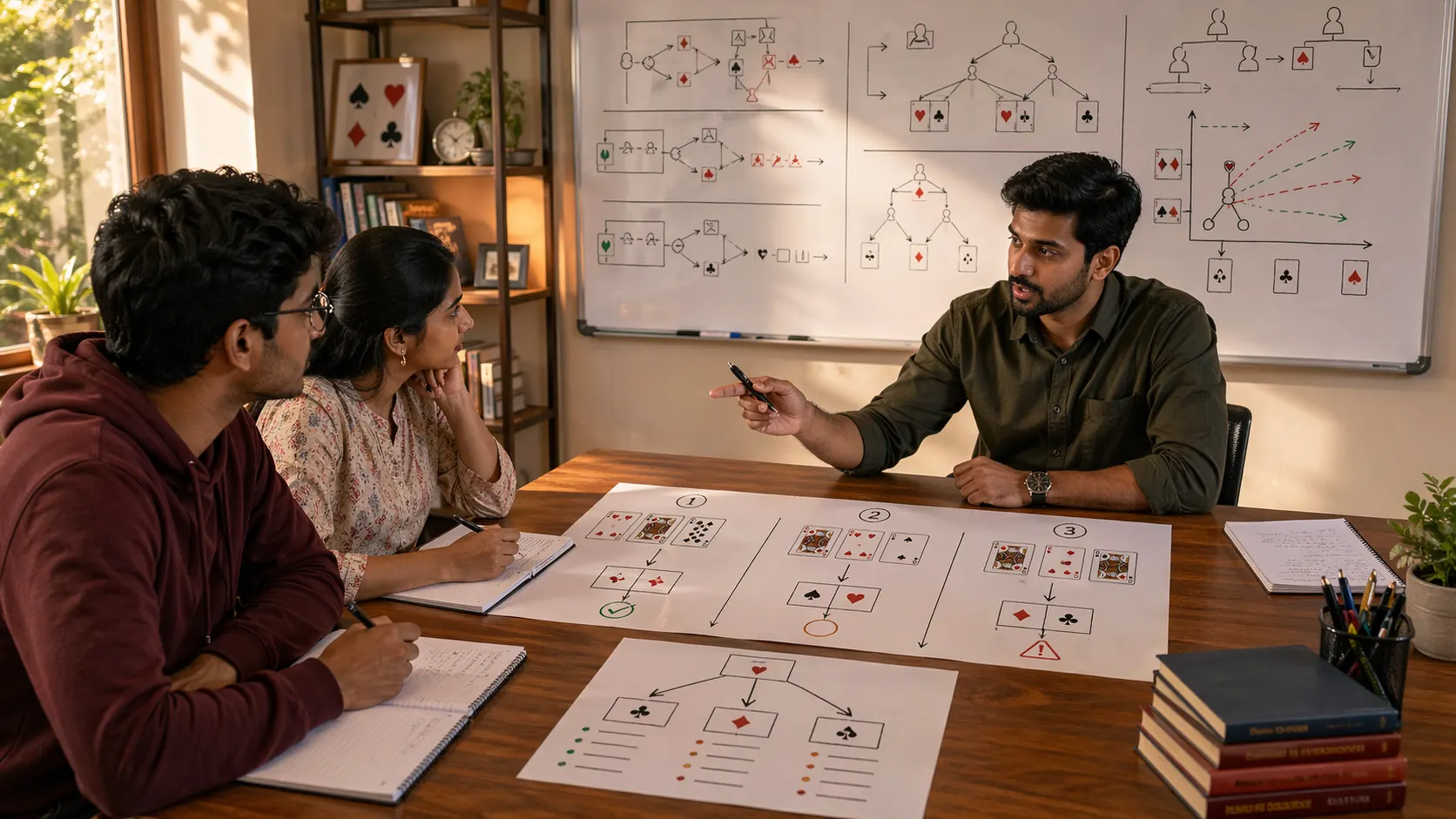
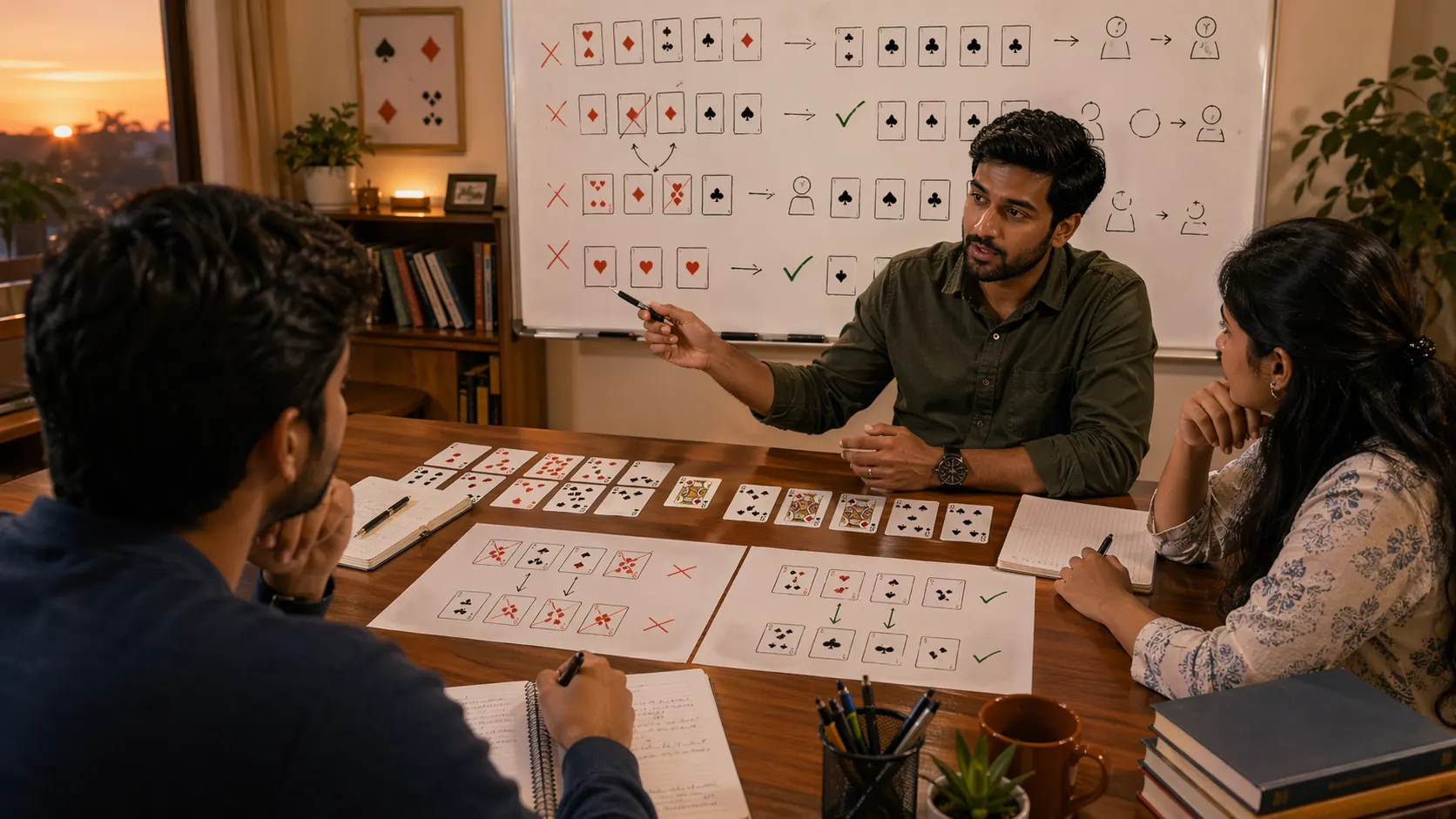
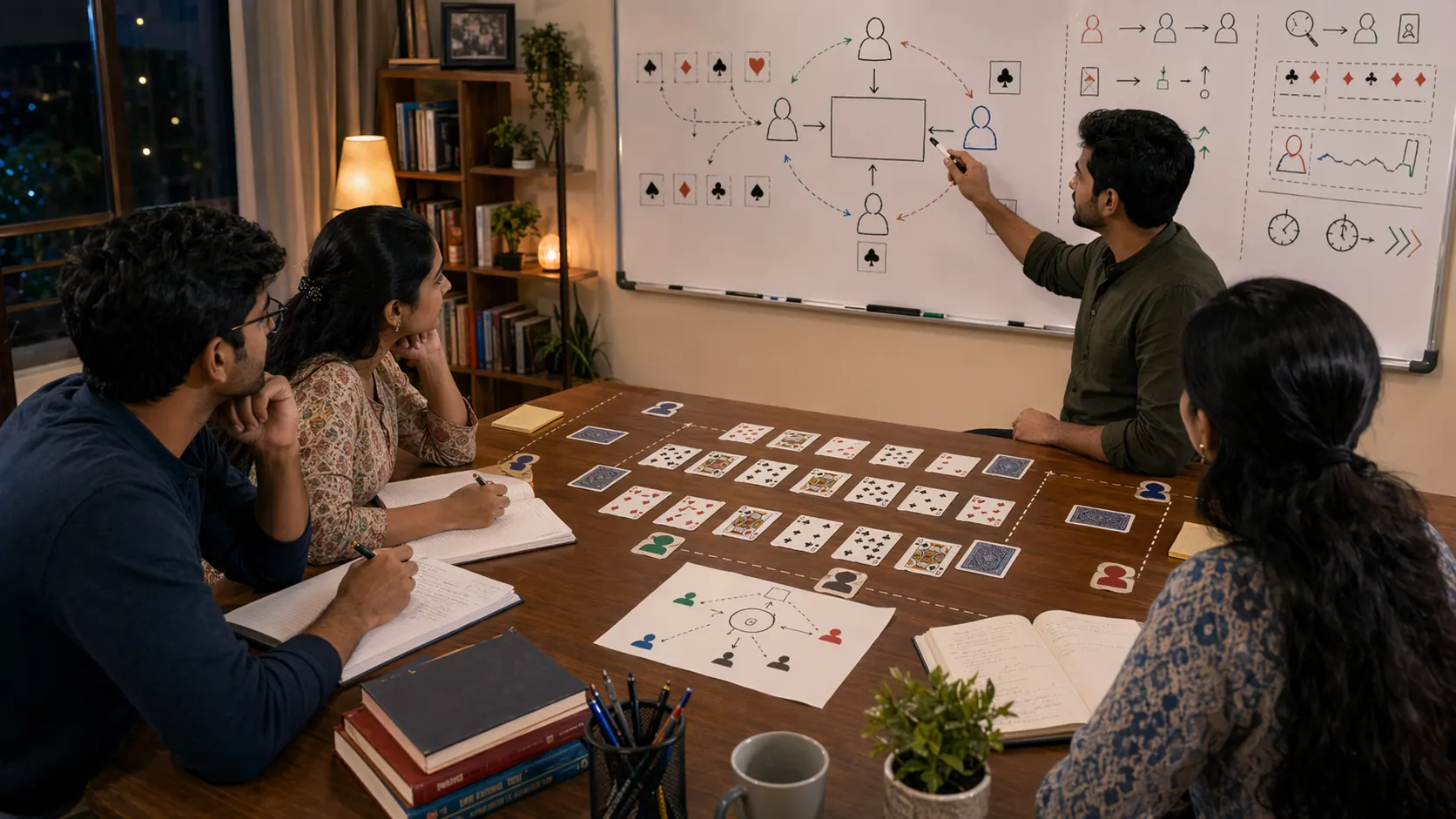
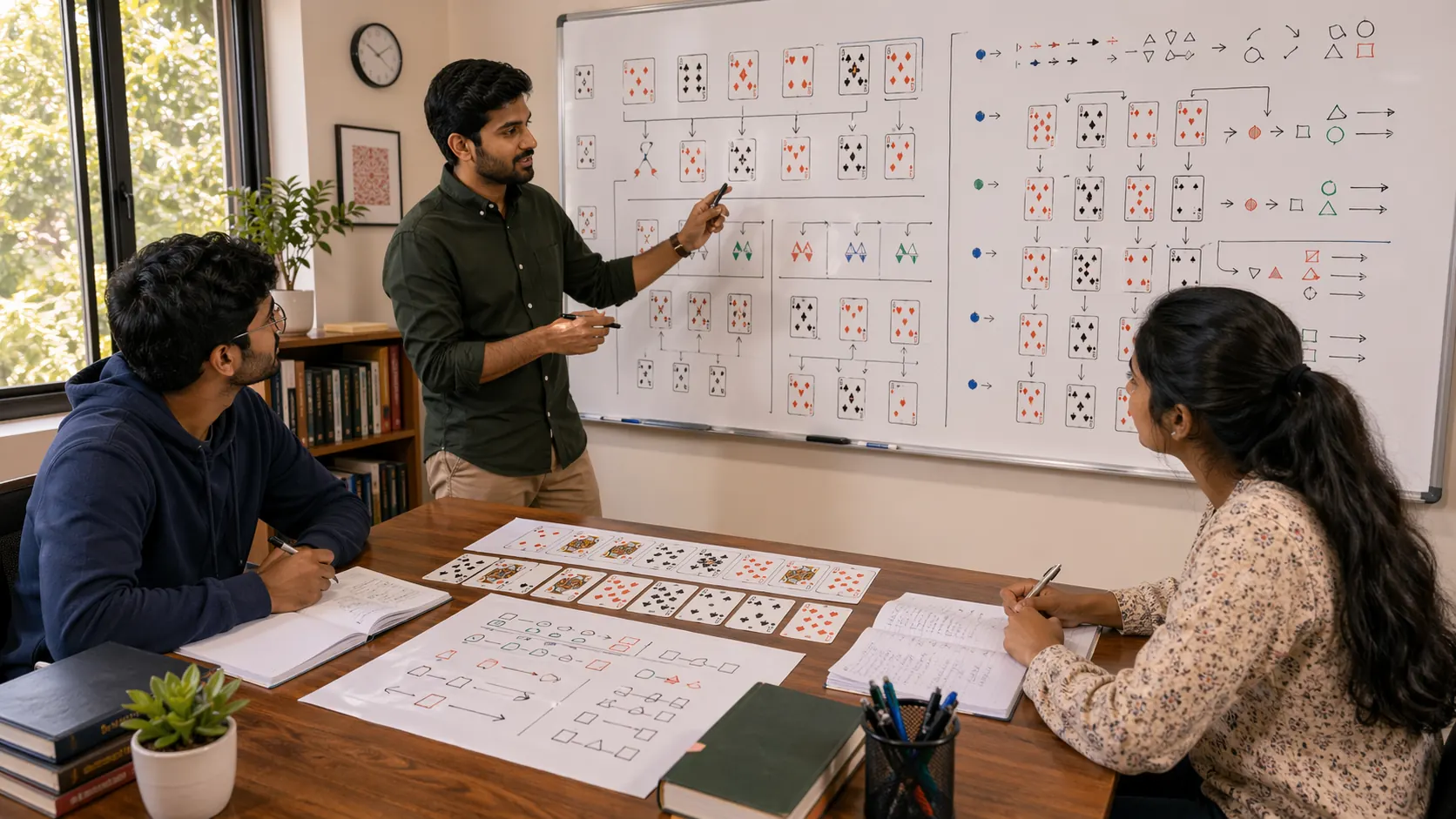
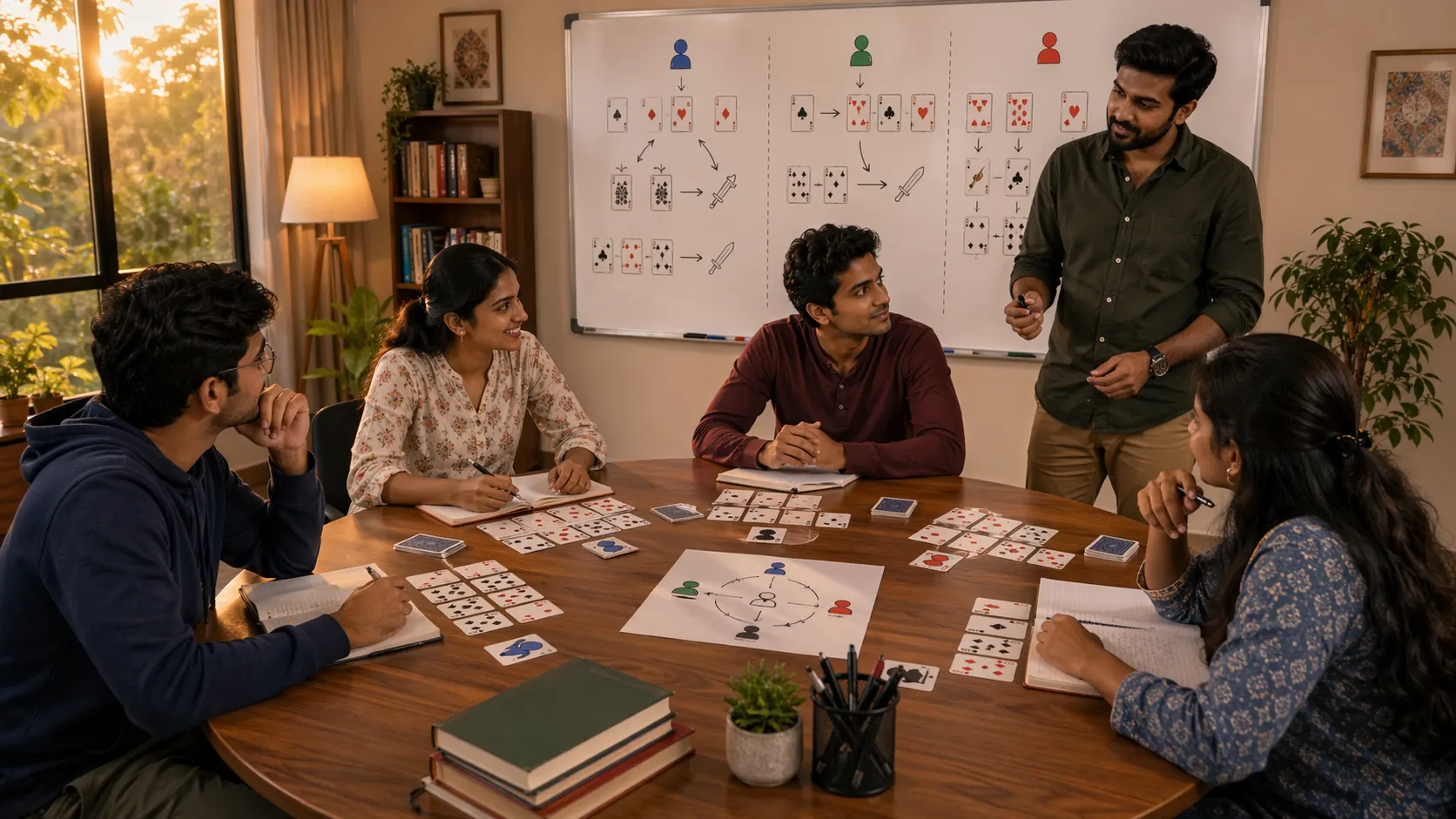
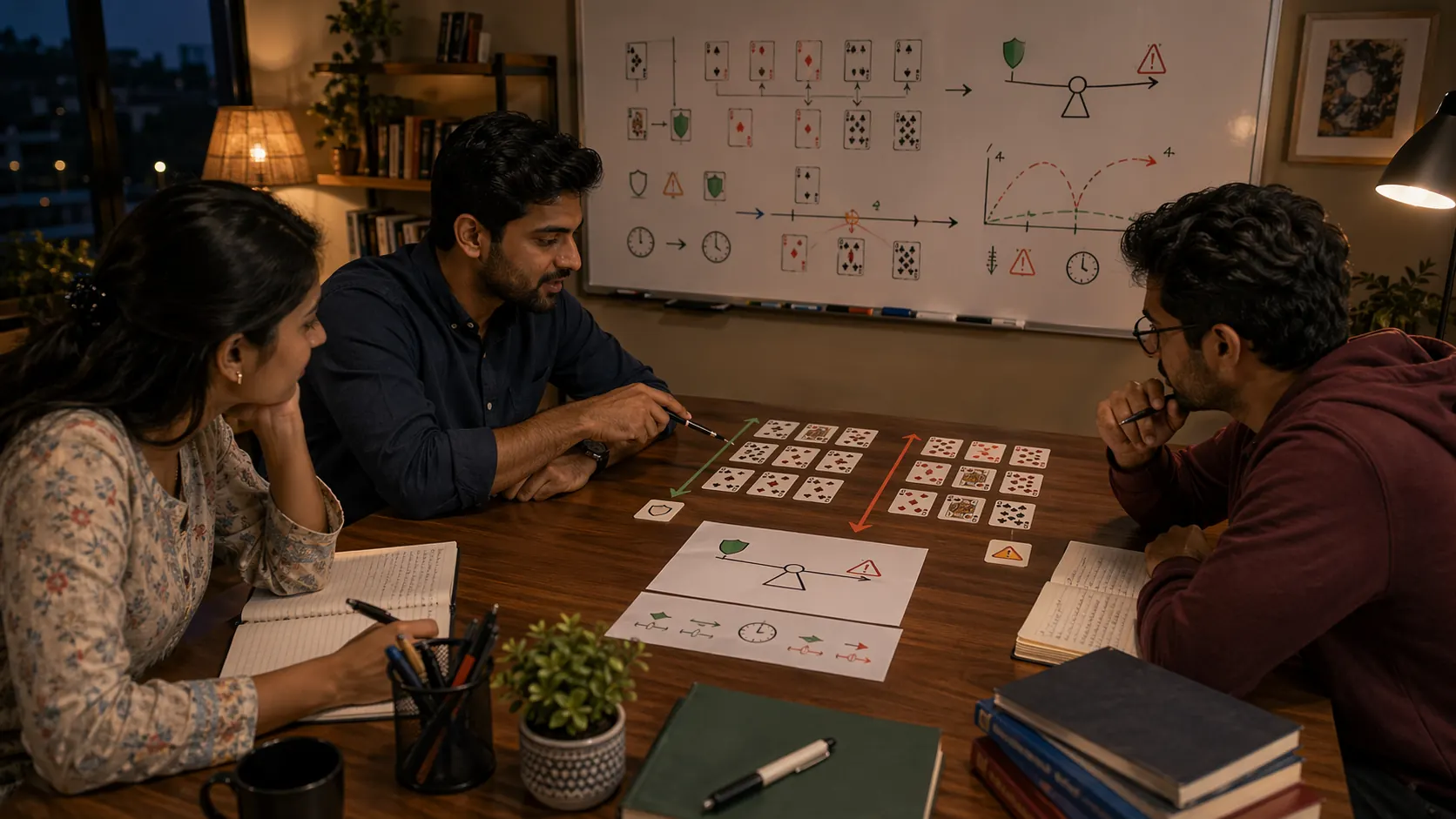
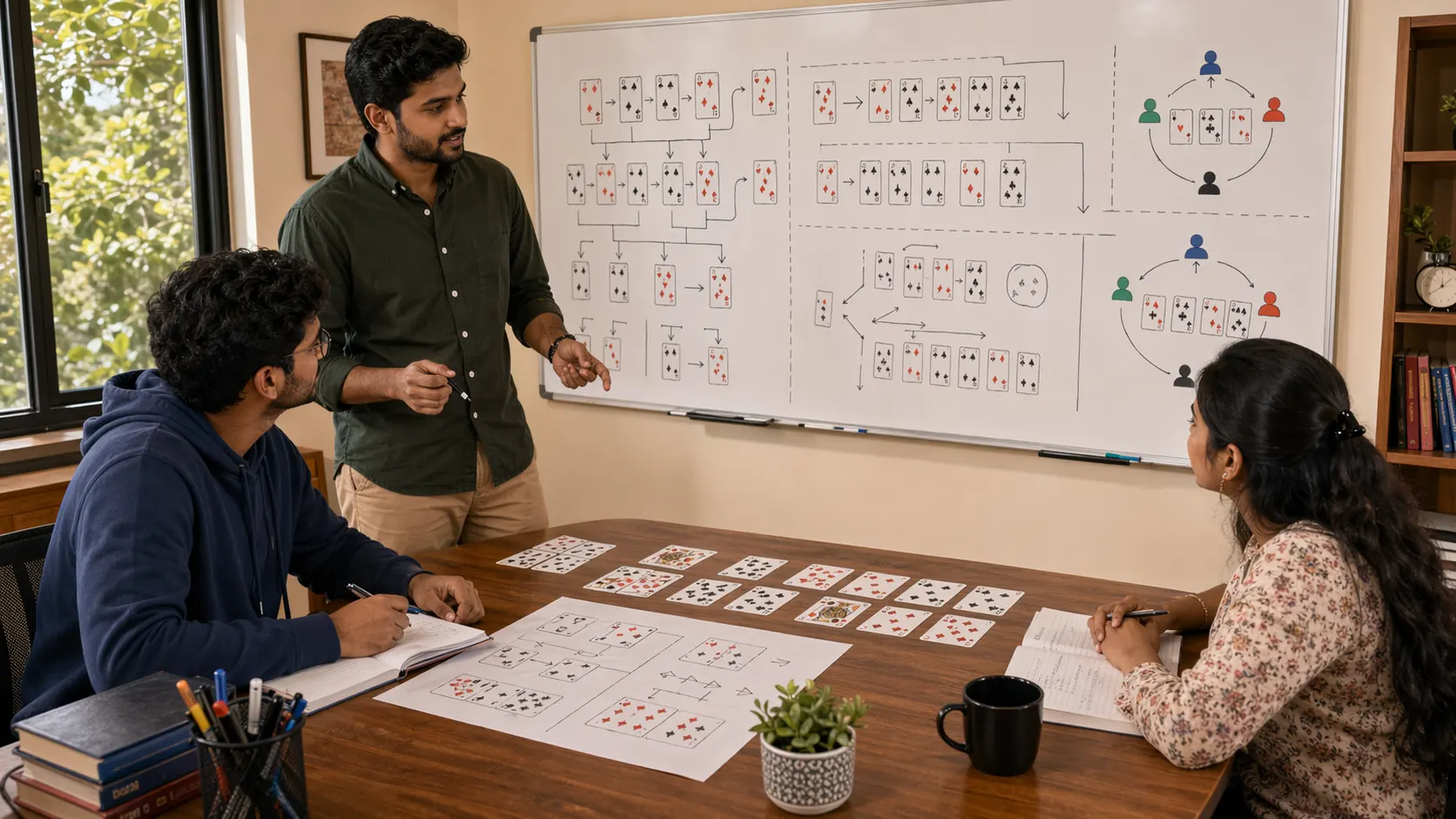
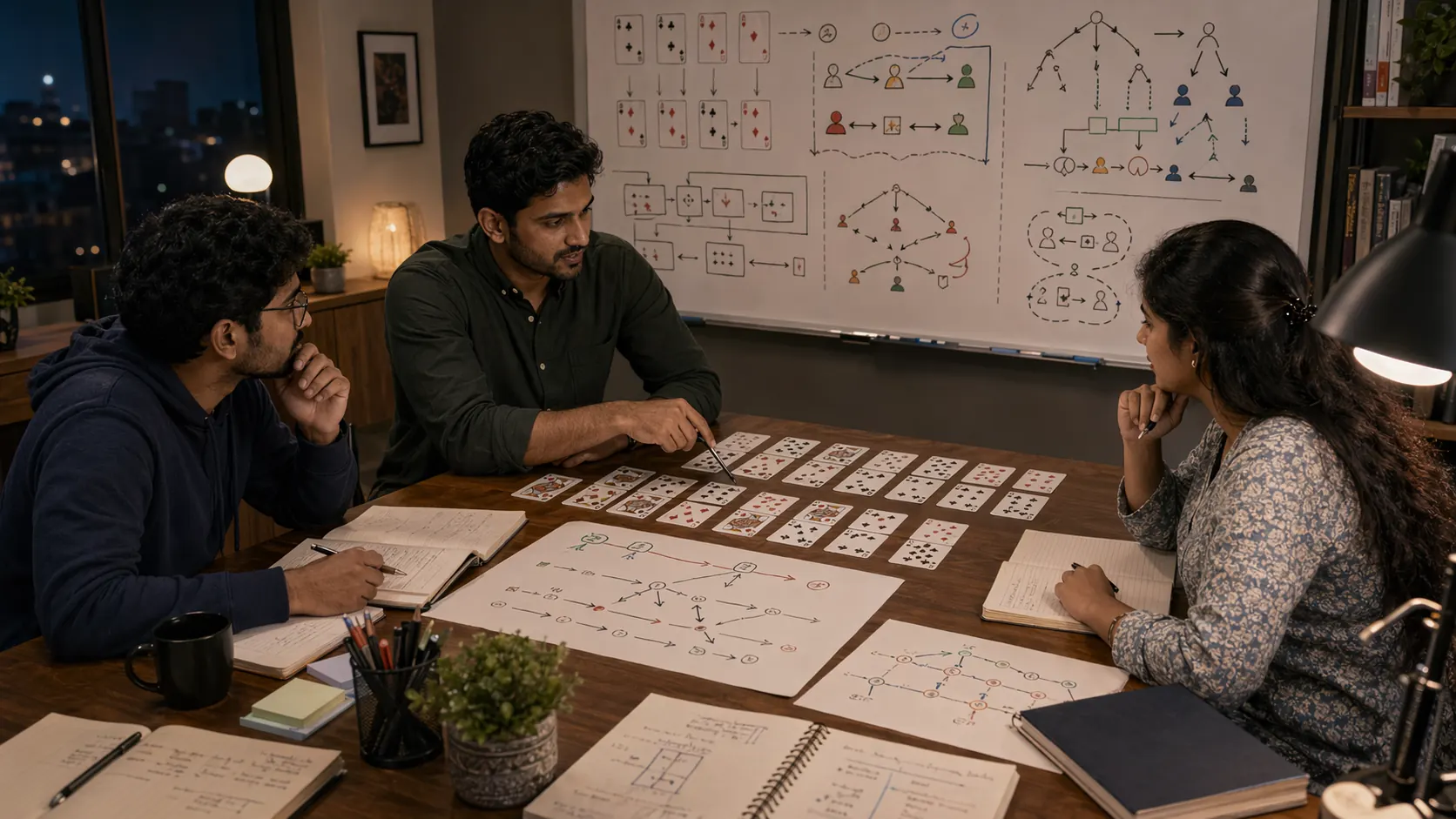
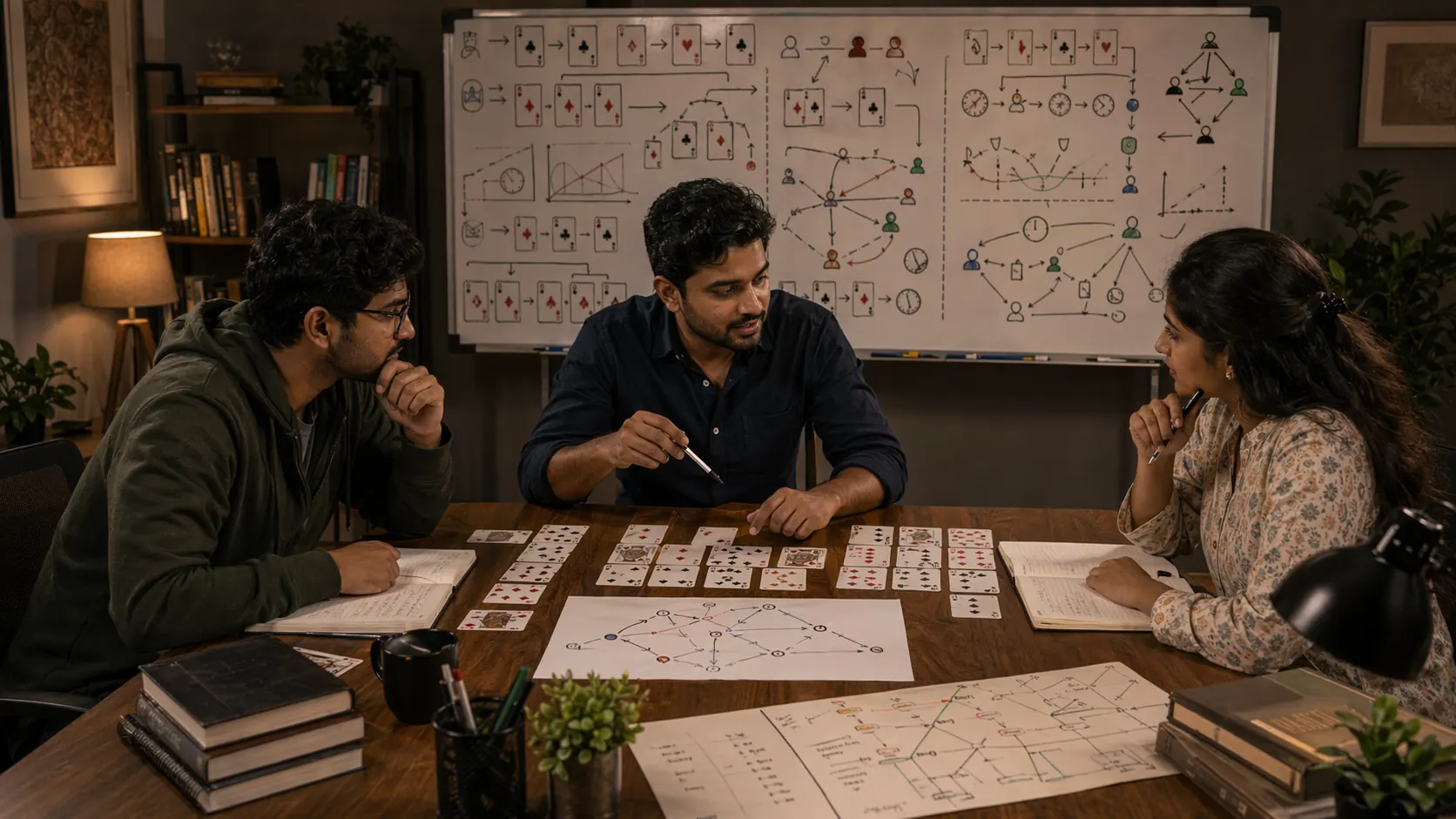
Shared card-game skills, table reading, and realistic review notes across familiar Indian card games.
Use this hub like a post-session teaching board. Start with hand structure and table rhythm, then move into decision quality, awareness, patterns, risk, scenarios, and advanced ideas only after the basic reads are holding.
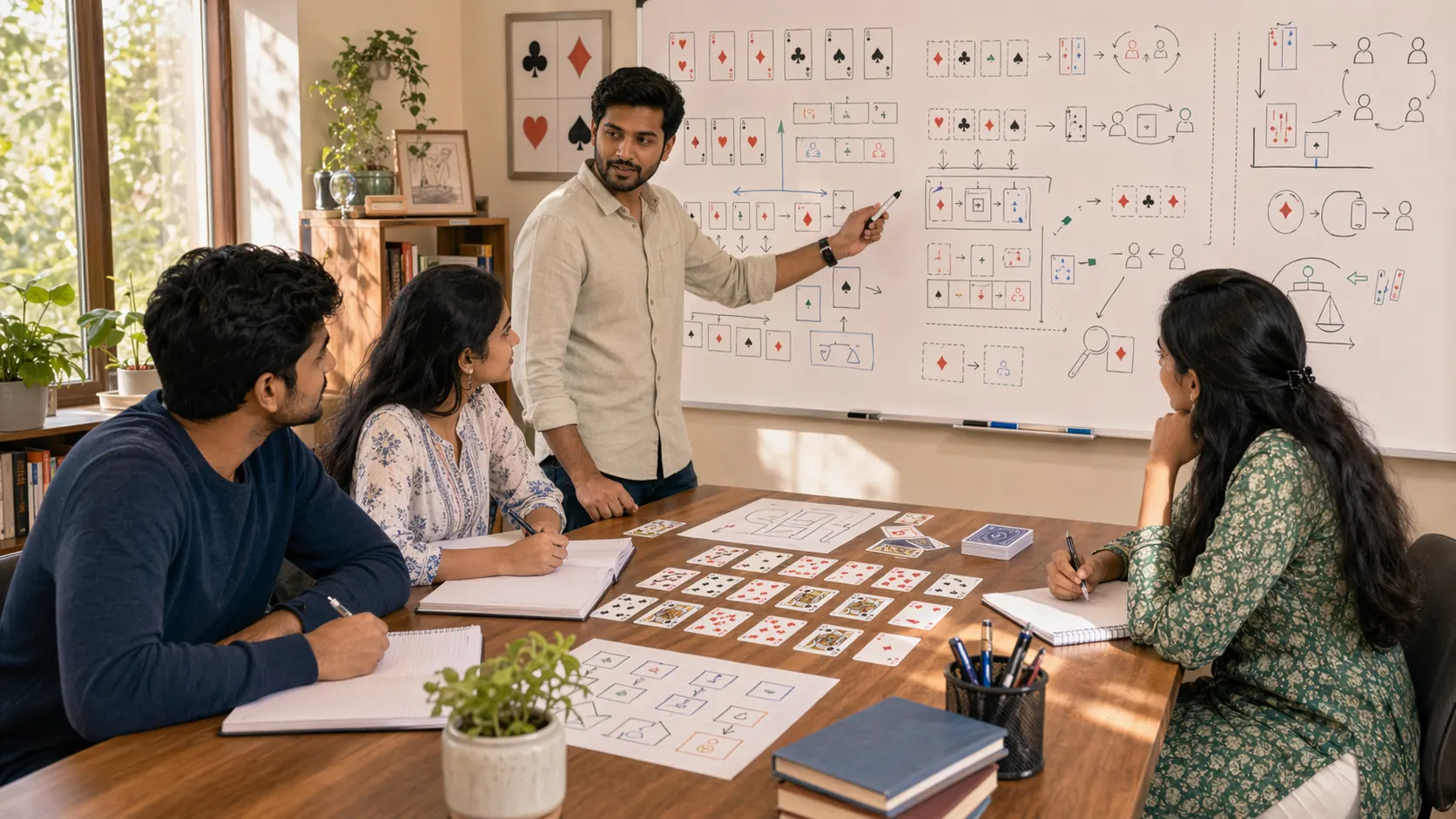
Readable study pages that turn card-game experience into clearer judgment and better post-game review.
It focuses on shared ideas across games instead of treating each table as a separate world with unrelated lessons.
Start with fundamentals, then move into mistakes, decisions, awareness, patterns, styles, risk, scenarios, and strategy.
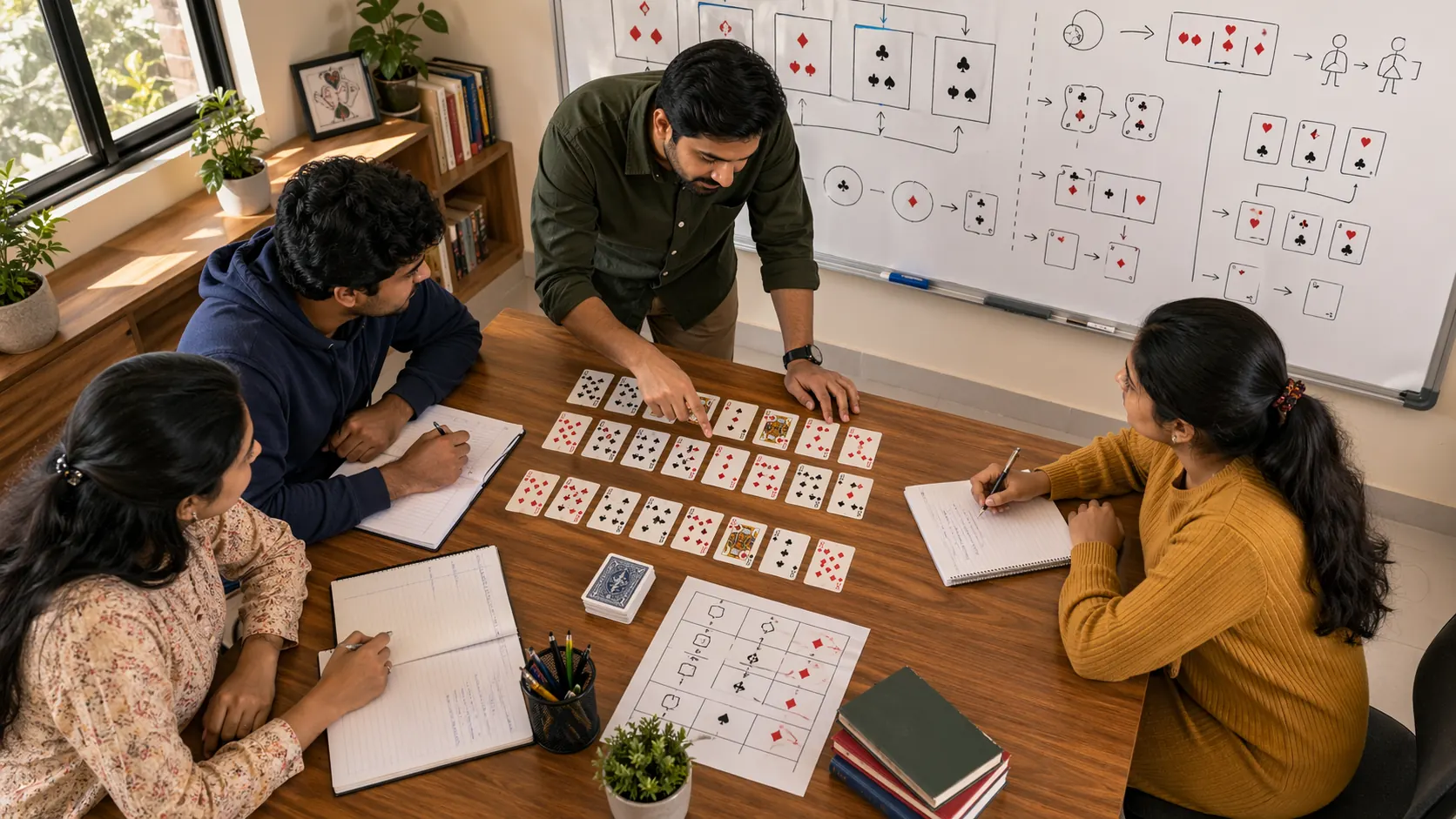
The goal here is not to throw disconnected tips at the reader. It is to explain why some card-game habits keep working across different tables, and why some mistakes keep repeating even when the cards change.
Indian Card Games Hub focuses on ideas that travel well across familiar card games: judging hand value, reading the rhythm of the table, comparing risk with recovery, spotting repeated behavioral patterns, and reviewing uncomfortable rounds more honestly afterward.
Practical notes that are easy to revisit after a real session, not broad promotional language.
The pages lean into what many Indian card games have in common instead of overfitting every lesson to one format.
Readers can identify whether a problem began with the hand, the table read, the timing, or the plan.
These are the central pages for readers who want to move from basic card-game structure to steadier table awareness and more reliable strategy.
Start with hand structure, table rhythm, value protection, and the baseline habits that make later strategy easier to trust.
Open fundamentals
Read how to compare options under uncertainty without mistaking urgency for clarity.
Open decision making
See the repeated errors that quietly cost value across many card tables and why they are easy to miss in live play.
Open common mistakes
Learn how to widen the frame beyond your own hand and notice where the table is actually moving.
Open game awareness
Use repeated structures and behavior patterns to improve speed without letting familiarity replace judgment.
Open pattern recognition
Study style through repeated behavior, pressure response, and timing instead of quick labels.
Open play styles
Compare reward, fragility, timing, and recovery before committing too much to one line.
Open risk balance
Turn real table situations into review notes that help the next similar spot feel less chaotic.
Open scenarios
Move from isolated decisions to broader plans that still stay flexible when the round changes shape.
Open strategic thinking
Use layered information, adaptation, and table image only when they make the next decision clearer.
Open advanced conceptsThese themes run through the whole repository and explain why separate pages still connect to one learning process.
How to read the strength, fragility, and development path of a hand before acting too quickly.
How quiet rounds, fast rounds, and pressure shifts change the value of the same move.
How recurring player habits can improve timing and table reads when the evidence is strong enough.
How to learn from uncomfortable or close rounds without letting the result hide the process behind it.