Introduction
Strategic thinking in Indian card games matters because a good move is not only about the current hand. It is also about what shape the round is taking, what kind of future position the player is creating, and how much flexibility will remain if the table shifts.
This page explains how readers can think ahead without becoming rigid or overly theoretical.
Strategic Thinking Overview
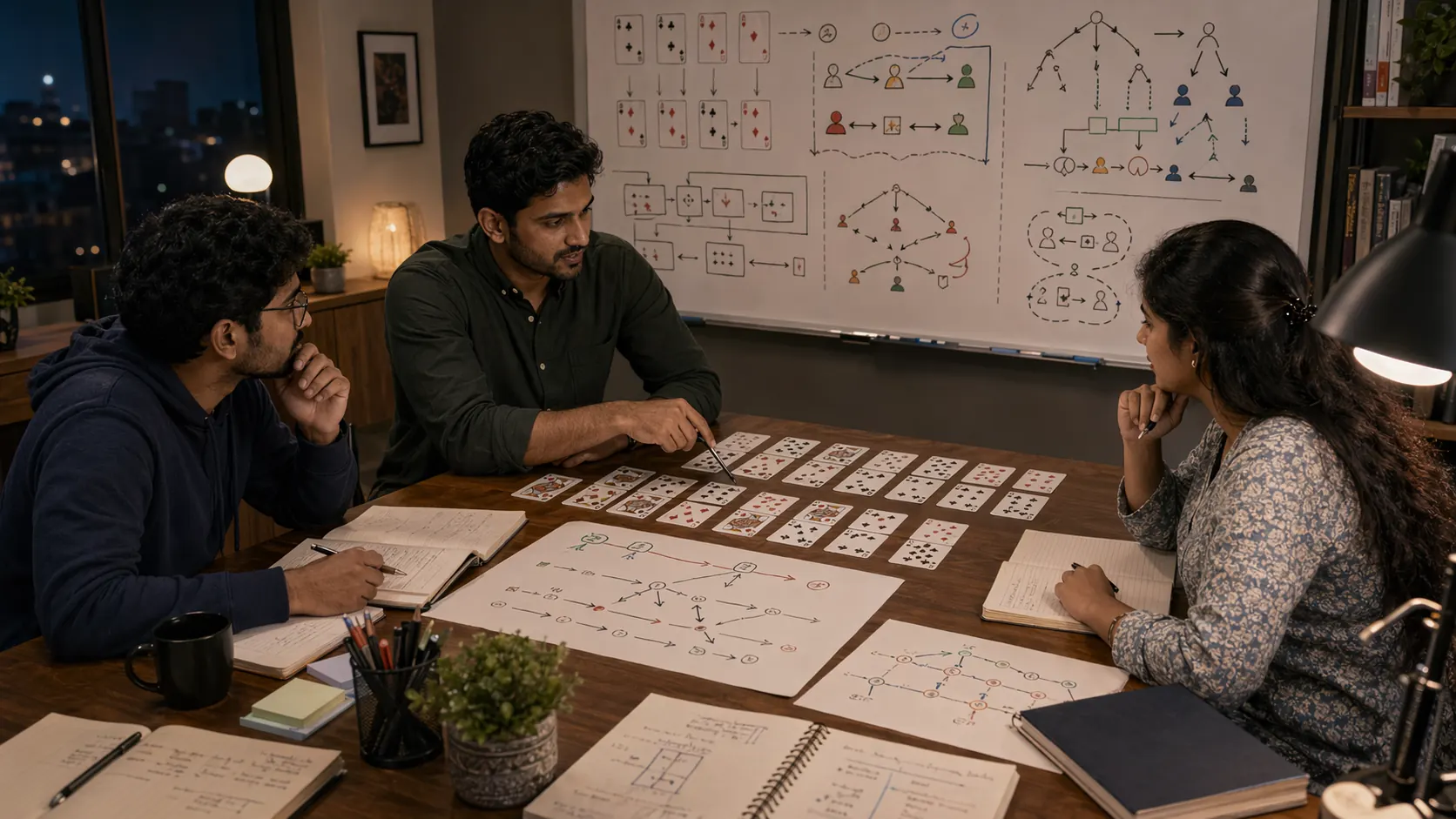
What Is Strategic Thinking?
Strategic thinking is the habit of linking the current move to a broader plan. In card games, that means understanding how local choices affect future pressure, hand development, defensive options, and the ability to adapt if the round changes direction.
1. Think Beyond The Immediate Hand
Strategic card play begins when readers stop judging a move only by what it does right now. The stronger question is what future shape it creates and whether that shape is actually desirable.
2. Link Small Decisions To Larger Goals
Each local choice should support a wider goal, whether that goal is value protection, controlled pressure, steady hand development, or denying comfort to the table.
3. Use A Short Planning Horizon
Strong strategy often looks one or two steps ahead, not ten. A short planning horizon is practical because it allows foresight without pretending that future information is already known.
4. Respect Trade-Offs
Strategic thinking becomes realistic when readers accept that most plans exchange one benefit for one cost. Better planning comes from choosing the trade-off the position can actually support.
5. Leave Space To Adapt
A useful plan gives direction without becoming brittle. Readers improve faster when they treat a plan as a working shape that can change after meaningful new information appears.
6. Consider The Opponent Story
Strategy is stronger when it includes what the other side is likely trying to achieve. That perspective often reveals timing windows, danger points, and places where a quiet move may outperform a forceful one.
7. Judge Strategy By Repeatability
A line that looks good once may still be weak over repeated play. Strategic thinking becomes more trustworthy when the reader asks whether the plan would still make sense across many similar rounds.
8. Turn Strategy Into Review
After the game, readers can ask whether the plan fit the table, whether it stayed flexible, and whether later decisions still matched the original strategic goal. That is how strategic thinking becomes a repeatable skill.
Common Mistakes
- Planning too rigidly and refusing to update after the table changes.
- Thinking far ahead while the current move is still unstable.
- Mistaking a neat explanation for a durable strategy.
Summary
Strategic thinking in Indian card games helps readers create better future positions without losing touch with the reality of the current table. The strongest plans are clear, flexible, and honest about trade-offs.
SEO Keywords
- strategic thinking in Indian card games
- card game strategy
- Indian card game guide
- card game planning
- table strategy