Introduction
Pattern recognition in Indian card games matters because repeated structures help readers make sense of the table faster. A familiar rhythm, a familiar type of pressure, or a familiar kind of mistake can reduce confusion and improve reaction quality.
This page focuses on how to use pattern recognition well without turning it into lazy assumption.
Pattern Recognition Overview
What Is Pattern Recognition?
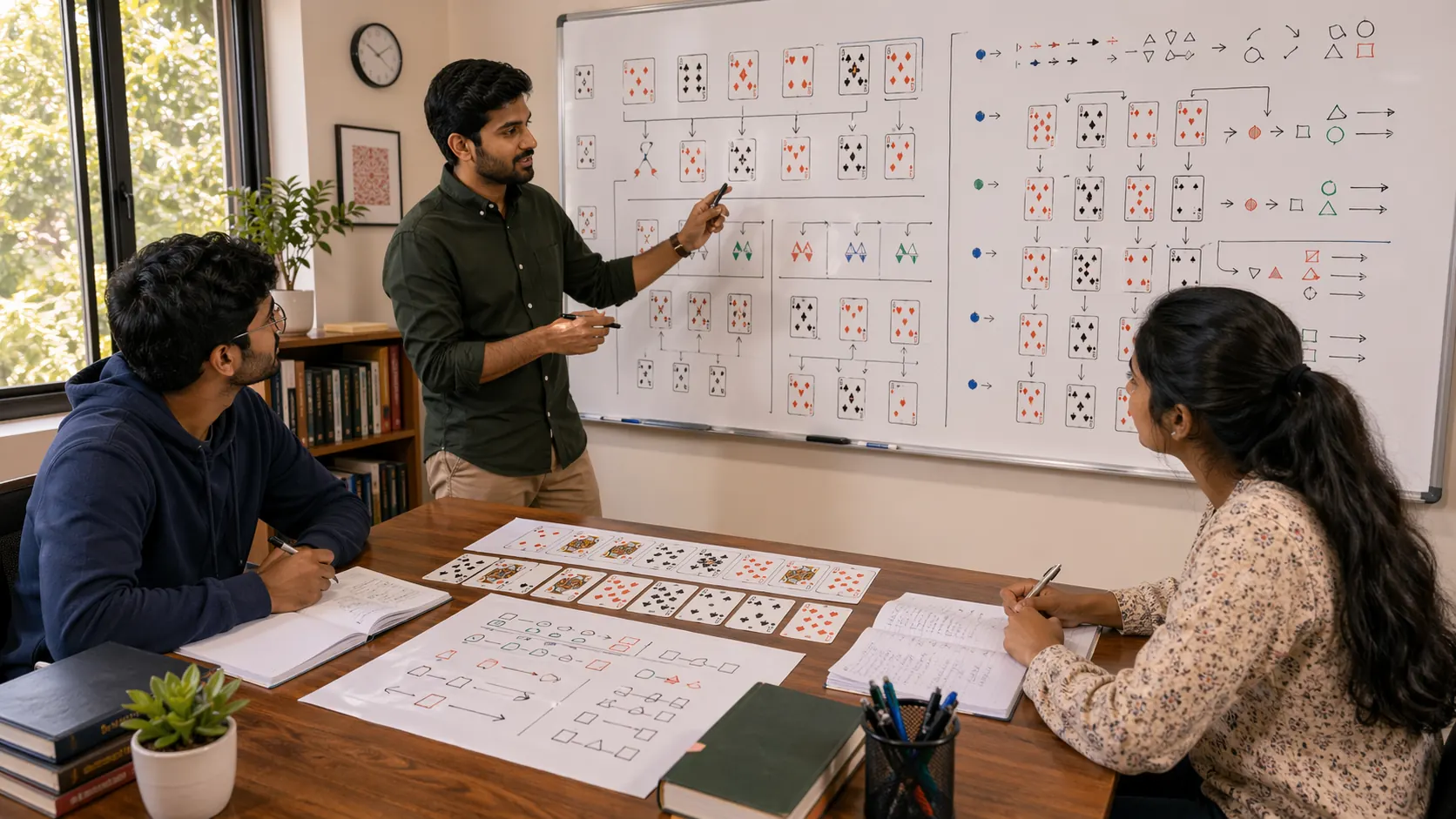
Pattern recognition is the ability to notice repeated structures in hands, rounds, and player behavior. It helps readers compare a current situation with earlier ones and judge whether a familiar response is likely to remain useful.
1. Recognize Repeated Table Shapes
Many rounds share similar table structures even when the exact cards are different. Recognizing those shapes helps readers identify where pressure is building and which lines are starting to look fragile.
2. Compare Similar Hands Carefully
Two hands can look similar while demanding different priorities. Pattern recognition becomes more reliable when readers compare both the similarity and the important difference before choosing a line.
3. Notice Behavioral Patterns
Players often reveal useful habits across repeated rounds. Some hesitate in similar spots. Some apply pressure only after comfort appears. Some retreat too late. These patterns matter when they repeat under similar conditions.
4. Avoid Forced Pattern Matching
One of the biggest dangers is seeing a pattern too early because the current round resembles a memorable old one. A useful reminder is that a familiar feeling is not yet a confirmed pattern.
5. Use Patterns To Improve Speed
The main benefit of pattern recognition is practical speed. It helps readers reach clearer questions faster, which is especially valuable in uncomfortable or changing rounds.
6. Confirm Patterns With Context
The same visible action means different things in different table environments. A reliable pattern includes context, timing, and repeated evidence, not only visual similarity.
7. Review Patterns After Play
Patterns become easier to trust when they are written down and checked after several sessions. A note that survives repeated comparison is much more useful than a pattern that exists only in memory.
8. Connect Recognition To Judgment
Pattern recognition is only a support skill. It should help readers think more clearly, not make them react automatically. The pattern should guide the analysis, not replace it.
Common Mistakes
- Treating one familiar clue as proof of a full pattern.
- Ignoring the difference that changes the right response.
- Letting pattern comfort replace actual judgment.
Summary
Pattern recognition in Indian card games helps readers process familiar table situations more quickly, but it works best when patterns are tested against context instead of used as shortcuts to certainty.
SEO Keywords
- pattern recognition in Indian card games
- card game strategy
- Indian card game guide
- card game patterns
- table pattern reading