Introduction
Advanced concepts in Indian card games matter because experienced readers eventually need more than basic hand reading. They need to think about layered information, adaptive opponents, timing shifts, and how one choice shapes later table reactions.
This page explains those deeper ideas in a practical way so they remain useful instead of sounding complicated for their own sake.
Advanced Concepts Overview
What Makes A Concept Advanced?
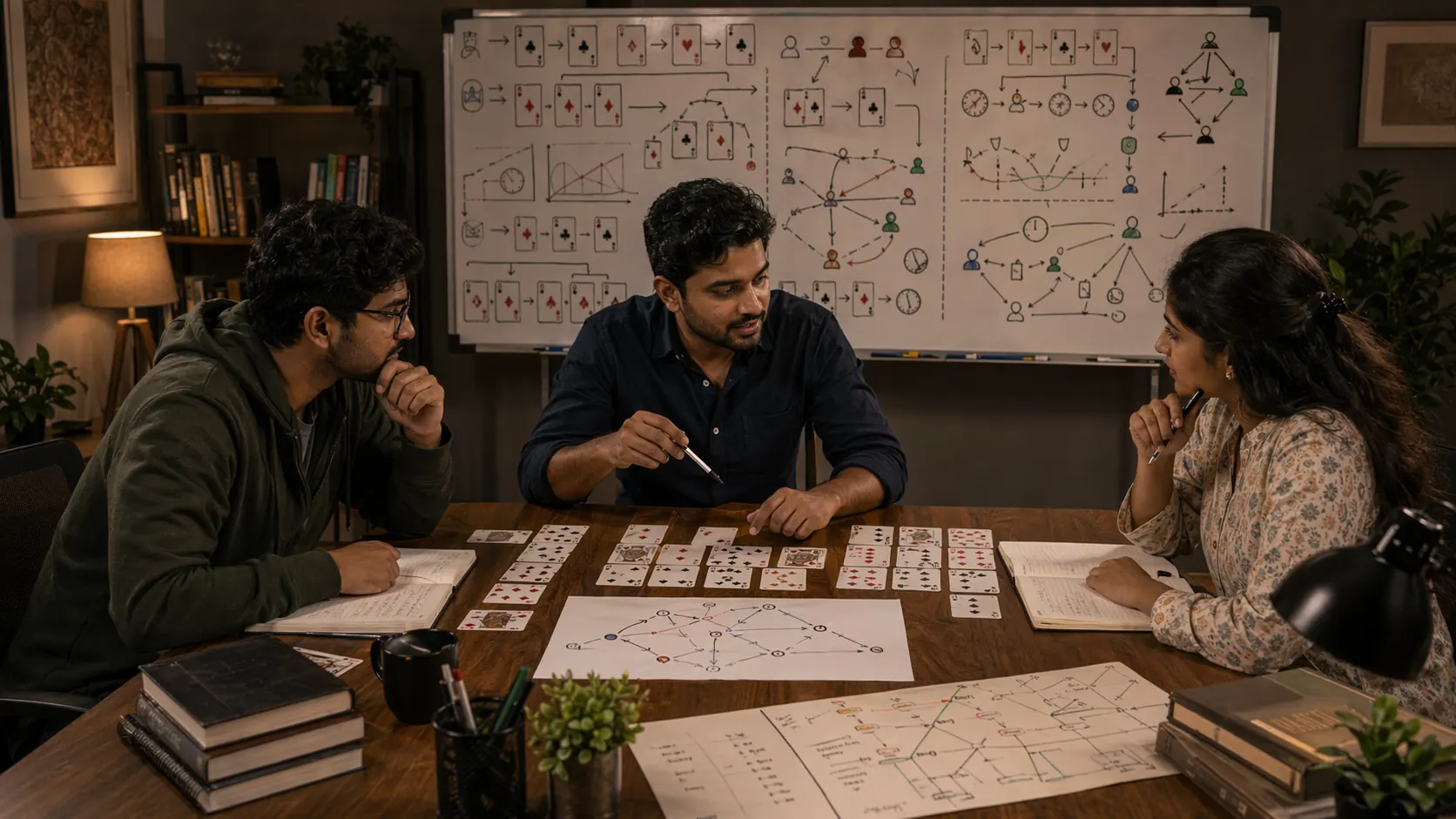
An advanced concept is deeper card-game thinking that becomes useful after the fundamentals are already stable. It usually involves combining several clues, planning for reactions, or understanding how table image and adaptation affect the value of a move.
1. Layer Information Carefully
Advanced card play often depends on combining clues instead of trusting one signal too much. Behavior, table rhythm, visible card flow, and previous tendencies all matter more when read together.
2. Respect Adaptive Opponents
Some players change after they notice your habits. Advanced thinking becomes useful when it helps readers recognize that the table is no longer reacting passively.
3. Value The Marginal Spot
Many deeper lessons come from close hands and awkward rounds, not from obvious ones. Those marginal spots reveal whether the player truly understands why one line is stronger than another.
4. Think About Future Reactions
An advanced choice is often judged not just by what it does now, but by what it invites next. Readers improve when they ask how the table is likely to answer the current move.
5. Use Table Image Practically
In some card games, the way others read your style affects how much pressure your decisions create. Advanced concepts help readers think about that image without turning it into theatre.
6. Avoid Decorative Complexity
One of the biggest advanced-level mistakes is using a deep-looking line mainly because it feels clever. The stronger line is often the one that improves the position most practically.
7. Connect Advanced Ideas To Fundamentals
Deeper concepts are useful only when they refine the basics. If they are replacing basic honesty about hand strength, timing, or pressure, they are probably hurting more than helping.
8. Review Whether Depth Added Value
After the game, it helps to ask whether the advanced idea actually improved the line. Did it create clarity, flexibility, or stronger pressure? Or did it only make the choice harder to explain?
Common Mistakes
- Using advanced language to hide a basic reading mistake.
- Forcing complexity into ordinary positions.
- Treating one successful deep line as proof that it is broadly reliable.
Summary
Advanced concepts in Indian card games become valuable when they sharpen practical judgment instead of replacing it. The strongest deeper ideas usually make the next part of the round clearer, not more dramatic.
SEO Keywords
- advanced concepts in Indian card games
- card game strategy
- Indian card game guide
- advanced card game thinking
- table adaptation