Introduction
Indian card games fundamentals matter because they give readers a stable way to understand what is happening before they try to outplay anyone. In many card games, the most expensive mistakes do not begin with a dramatic decision. They begin with a weak read of the hand, the table, or the real objective of the round.
This page explains the baseline habits that help across many Indian card games. The focus is practical understanding, not flashy shortcuts.
Fundamentals Overview
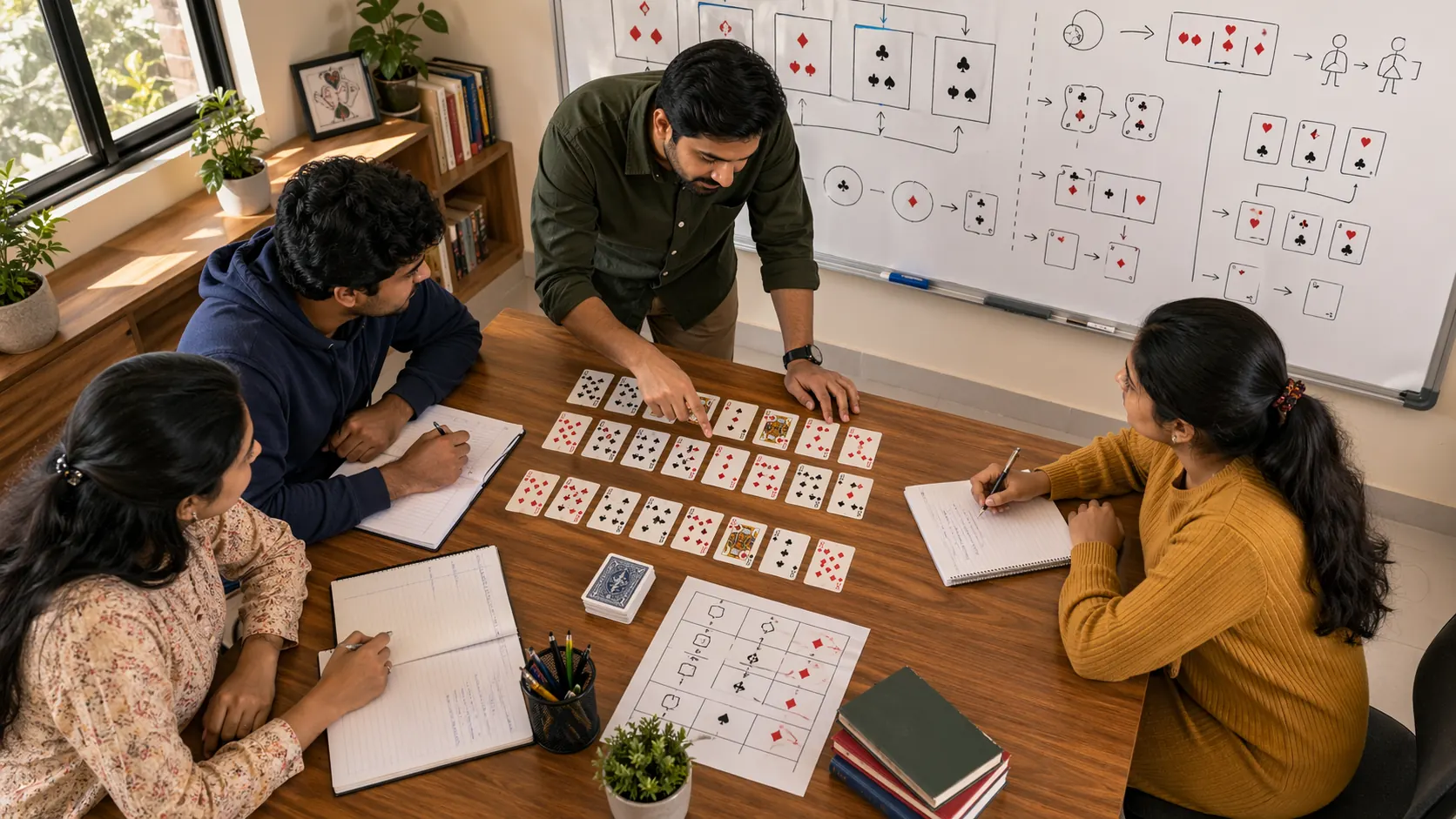
What Are The Fundamentals?
In this repository, fundamentals means the shared ideas that make later strategy easier to trust. That includes understanding hand value, knowing what the round is asking for, tracking visible information, and choosing lines that stay practical when the table becomes unclear.
1. Start With The Real Objective
Many readers improve faster once they stop thinking only about the next move and start thinking about the actual goal of the round. Some situations reward patience, some reward hand improvement, and some reward early protection of value. If the objective is misunderstood, even technically correct-looking plays can become weak.
2. Respect Hand Structure
A hand is not just a collection of cards. It is a structure with strengths, weaknesses, and development paths. Good fundamentals help readers judge whether a hand is stable, flexible, risky, or too dependent on one favorable outcome.
3. Read Before Reacting
Card games often punish quick reactions built on incomplete information. A strong basic habit is to pause long enough to ask what has changed, what is likely, and what can safely wait. This improves both hand reading and table reading.
4. Protect Value Early
One of the most useful beginner lessons is that avoidable loss matters. A player does not always need the most ambitious line. In many ordinary rounds, the stronger choice is the one that protects useful value while keeping later options open.
5. Notice Table Rhythm
Fundamentals are not only about your own hand. They also include understanding the rhythm of the table. Some rounds stay quiet for a long time and reward restraint. Others accelerate quickly and require earlier commitment. Recognizing that rhythm helps readers avoid being late to important decisions.
6. Keep Information Organized
Card-game improvement depends heavily on how well a player remembers what has already become clear. Visible actions, discarded resources, repeated tendencies, and timing changes all matter. Good fundamentals turn scattered information into usable clues.
7. Use A Simple Review Habit
After a session, it helps to ask three things: what the hand or round was really asking for, which clue was missed, and whether the final decision matched the actual position. That kind of review builds stronger fundamentals much faster than outcome-only thinking.
8. Build Toward Later Strategy
Once the basics are steady, later pages such as decision making, pattern recognition, and risk balance become much more useful. Fundamentals do not compete with advanced ideas. They support them.
Common Mistakes
- Treating the hand as isolated cards instead of a connected structure.
- Reacting too quickly before checking the table rhythm.
- Reviewing the result without asking whether the original read was sound.
Summary
Indian card games fundamentals give readers a repeatable base for stronger play. When the basics are clear, later strategy feels less confusing, review becomes more honest, and the table becomes easier to read in practical terms.
SEO Keywords
- Indian card games fundamentals
- card game strategy
- Indian card game guide
- card game basics
- table reading