Introduction
Scenarios in Indian card games matter because readers often remember situations more clearly than abstract rules. A concrete round, a difficult hand, or a recognizable table shift can teach practical lessons much faster than a long theoretical explanation.
This page explains how scenario study helps readers turn live experience into stronger card-game knowledge.
Scenarios Overview
What Are Card-Game Scenarios?
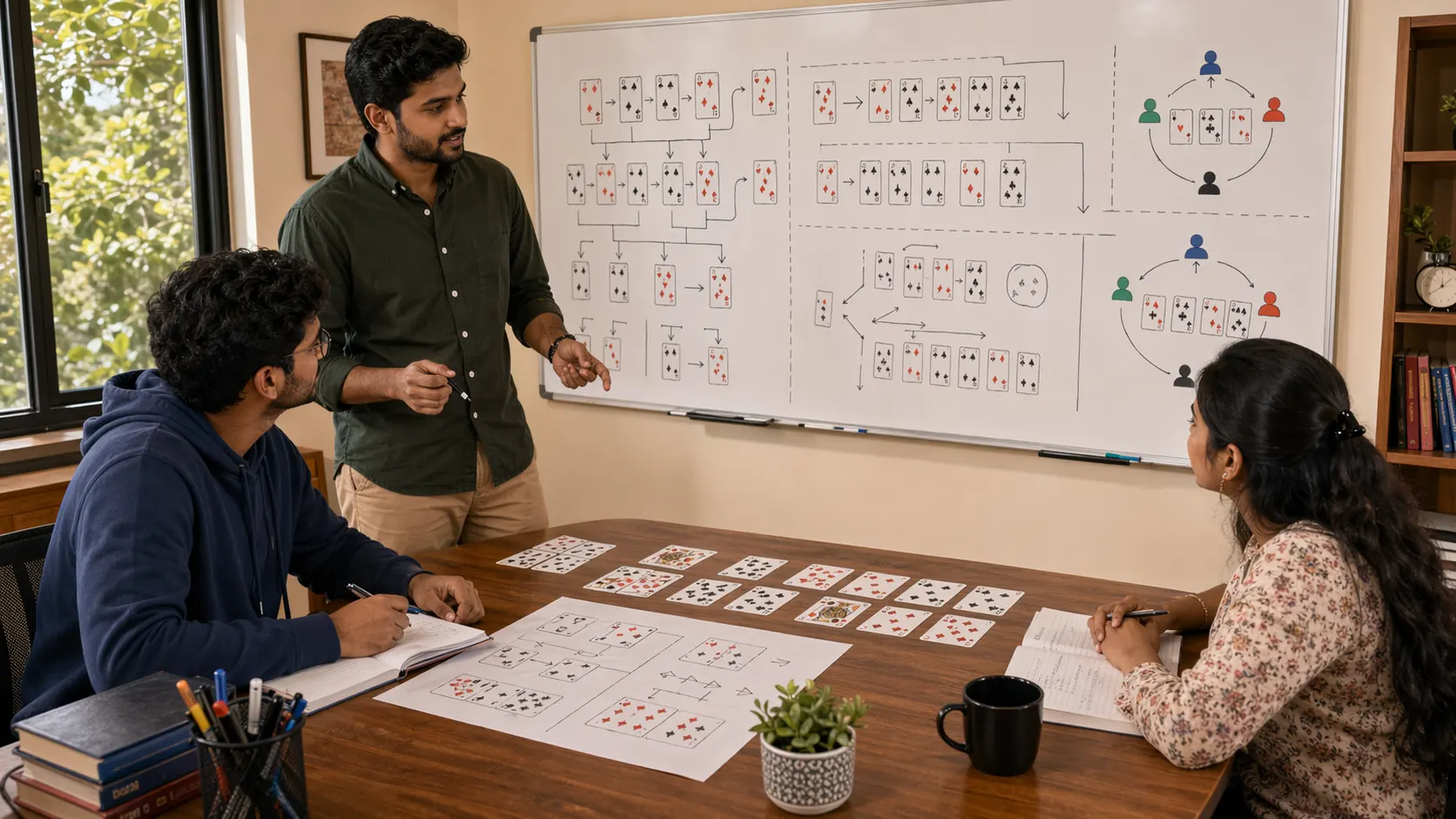
Scenarios are repeatable table situations that help readers study judgment in context. They may involve awkward hands, shifting pressure, uncertain reads, defensive turns, or close choices where the right line depends on more than one factor.
1. Use Scenarios To Make Theory Visible
Scenario study helps because it shows where an idea actually appears. Readers can connect the concept to a recognizable hand or table shape instead of leaving it as an abstract slogan.
2. Focus On The Turning Point
The most useful part of a scenario is often the moment where the round changes. That might be an overcommitment, a missed update, or a clue that should have changed the whole read.
3. Compare Similar Situations
Scenarios become stronger when readers compare two similar-looking rounds that demand different responses. That comparison helps reveal which details truly matter.
4. Use Scenarios To Build Priorities
A good scenario teaches what to protect first, what can wait, and where the real danger lies. This is especially useful for readers who feel lost when several choices all look possible.
5. Review Real Sessions, Not Only Ideal Ones
The best scenario notes often come from ordinary games, not perfect study examples. Real sessions reveal hesitation, emotional shortcuts, and unclear reads in a way that polished examples often hide.
6. Prepare For Repeated Table Problems
Scenario study becomes practical when it helps the next similar spot feel less chaotic. Familiar structure gives the reader a calmer starting point.
7. Keep The Lesson Transferable
The point of a scenario is not to memorize every detail. It is to understand the kind of pressure or trade-off the round created, so the lesson can travel to other games.
8. Use Scenarios In Post-Game Review
After a session, it helps to record the scenario briefly: what the hand looked like, what the table was doing, where the tension started, and what would be checked differently next time.
Common Mistakes
- Remembering the ending but not the turning point.
- Copying the same response into only superficially similar situations.
- Treating scenario notes like scripts instead of learning tools.
Summary
Scenarios in Indian card games help readers turn lived table experience into clearer judgment. They work best when the lesson stays tied to pressure, timing, and the real reason the round became difficult.
SEO Keywords
- scenarios in Indian card games
- card game strategy
- Indian card game guide
- card game situations
- table scenarios