Rummy review
Rummy review notes on sets, sequences, and discard awareness.
Rummy review is strongest when the hand is studied as a structure: which groups were reliable, which cards stayed flexible, and which discards quietly shaped the plan.
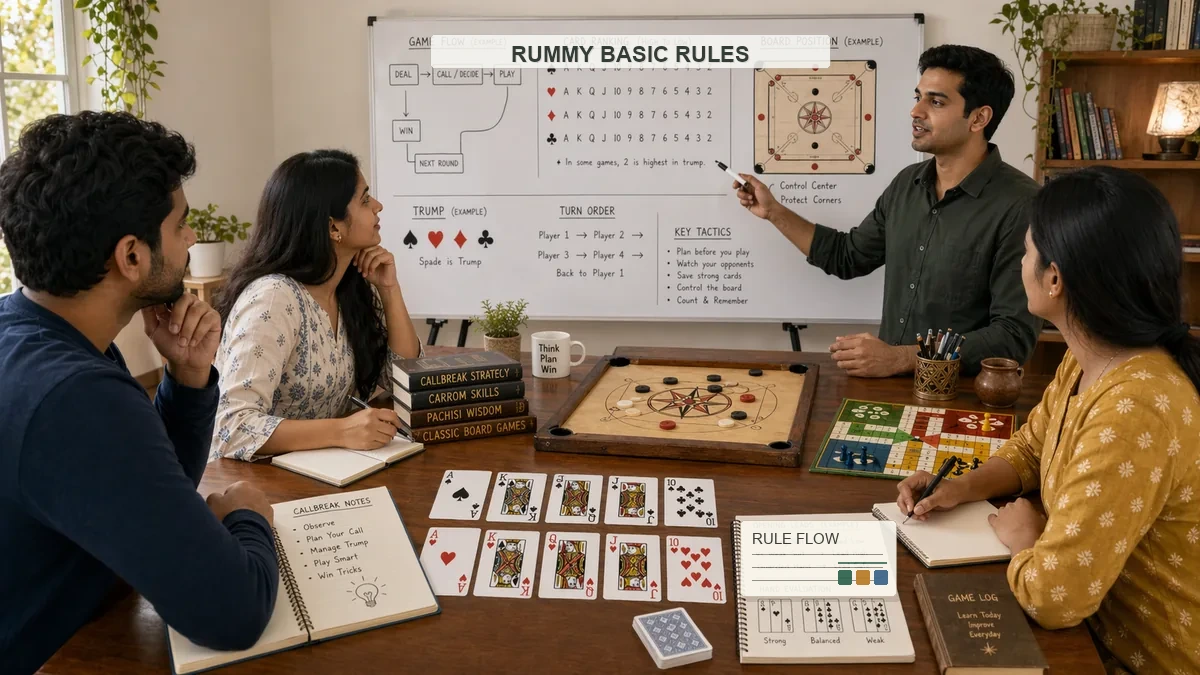
Rummy is built around forming valid groups from the cards in hand. In many common formats, players organize cards into sequences and sets, reduce unmatched cards, and prepare a valid declaration. The exact rules can vary, but the review logic stays similar: strong play depends on structure, flexibility, and careful timing.
Rummy Teaching Video
Use this teaching video as the main walkthrough before moving into the still-image lesson set. It gives the page a clearer learning path: watch the full Rummy explanation first, then review the specific decision topics below.
What Changes a Rummy Hand
Sequence Paths
Connected cards of the same suit give the hand a base. Review whether early discards protected the most realistic sequence paths.
Set Possibilities
Same-rank cards can become useful sets, but they should not distract from the groups required by the format being played.
Joker Placement
A joker is strongest when it completes a difficult group without wasting a natural card that could have formed a cleaner sequence.
Discard Signals
Cards picked and released by others are imperfect signals, but they still show which combinations may be active at the table.
Rummy Teaching Image Set
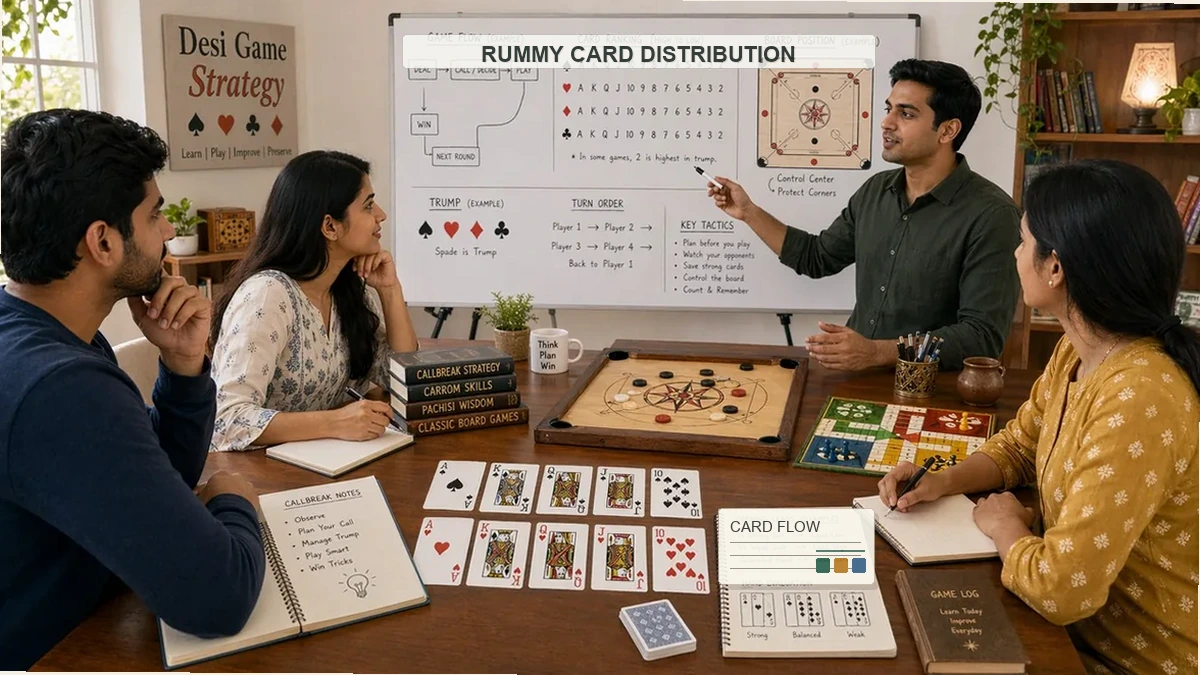
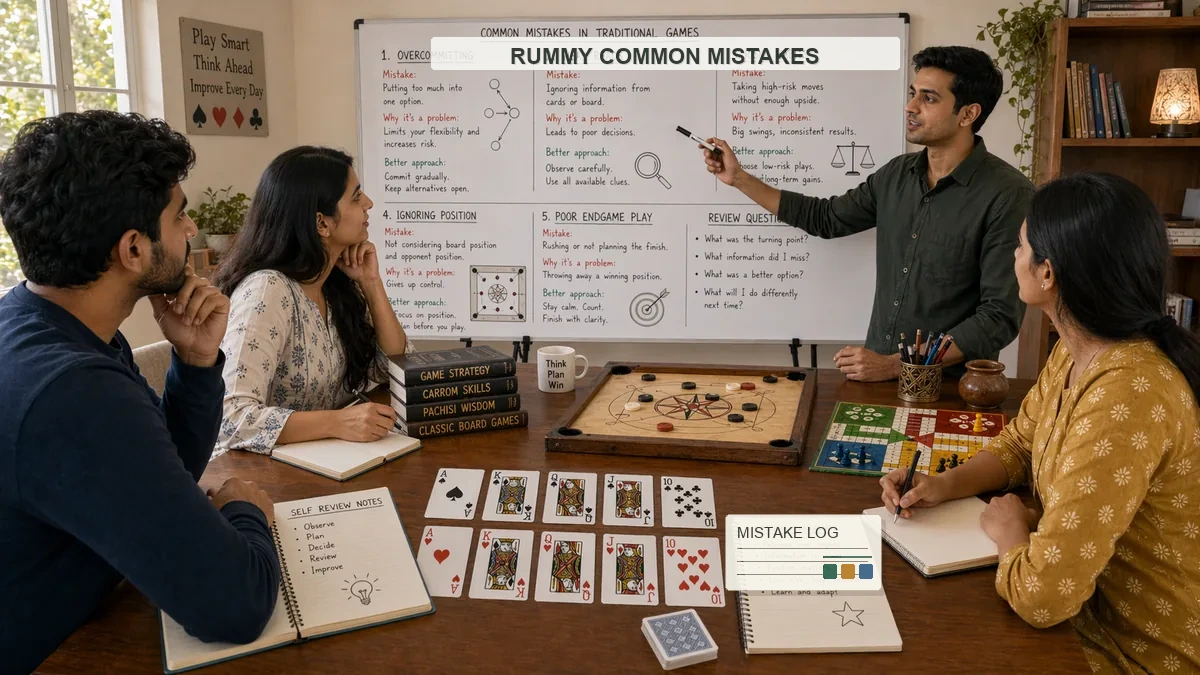
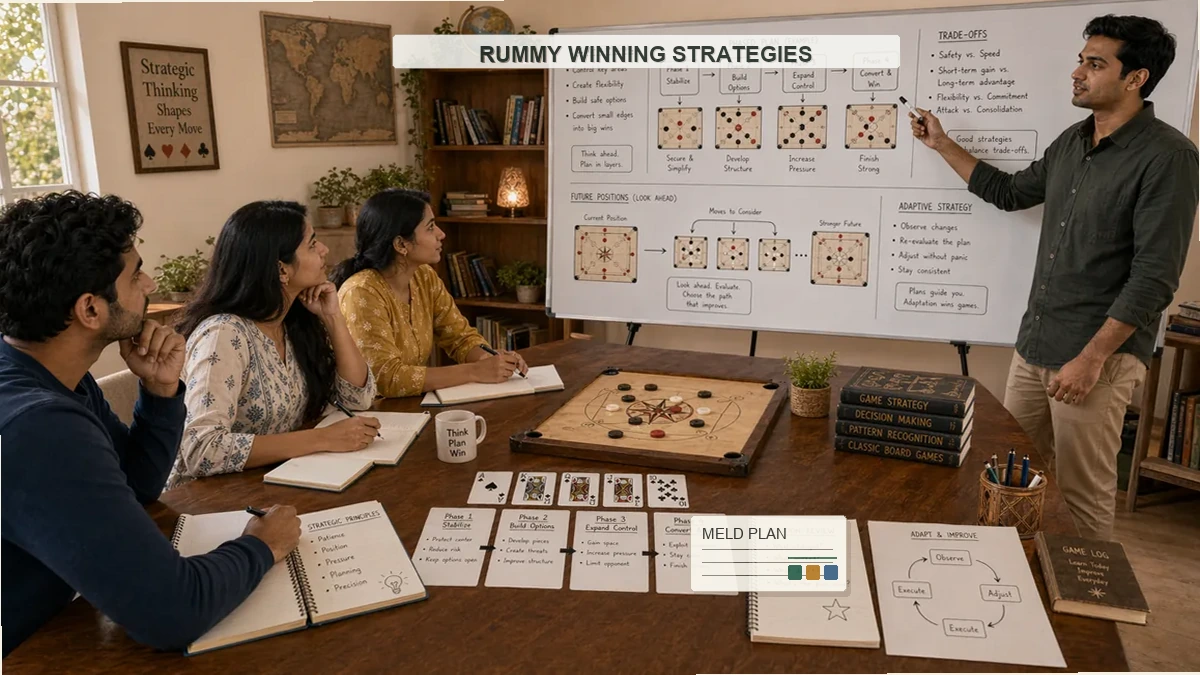
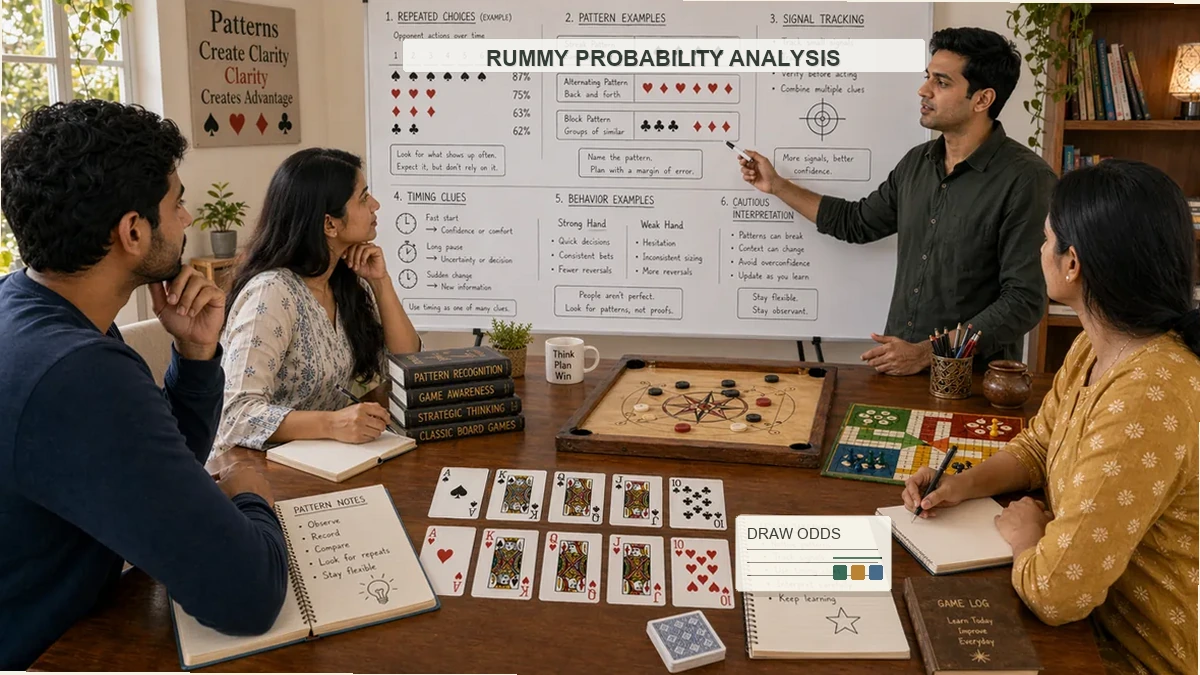
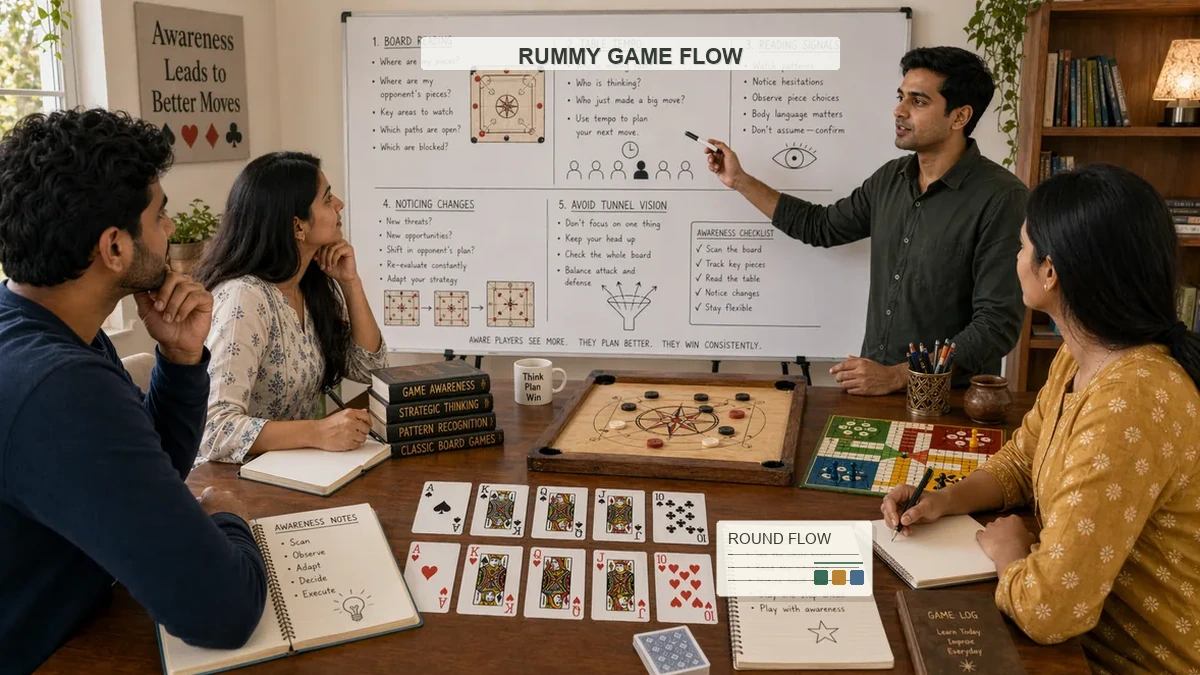
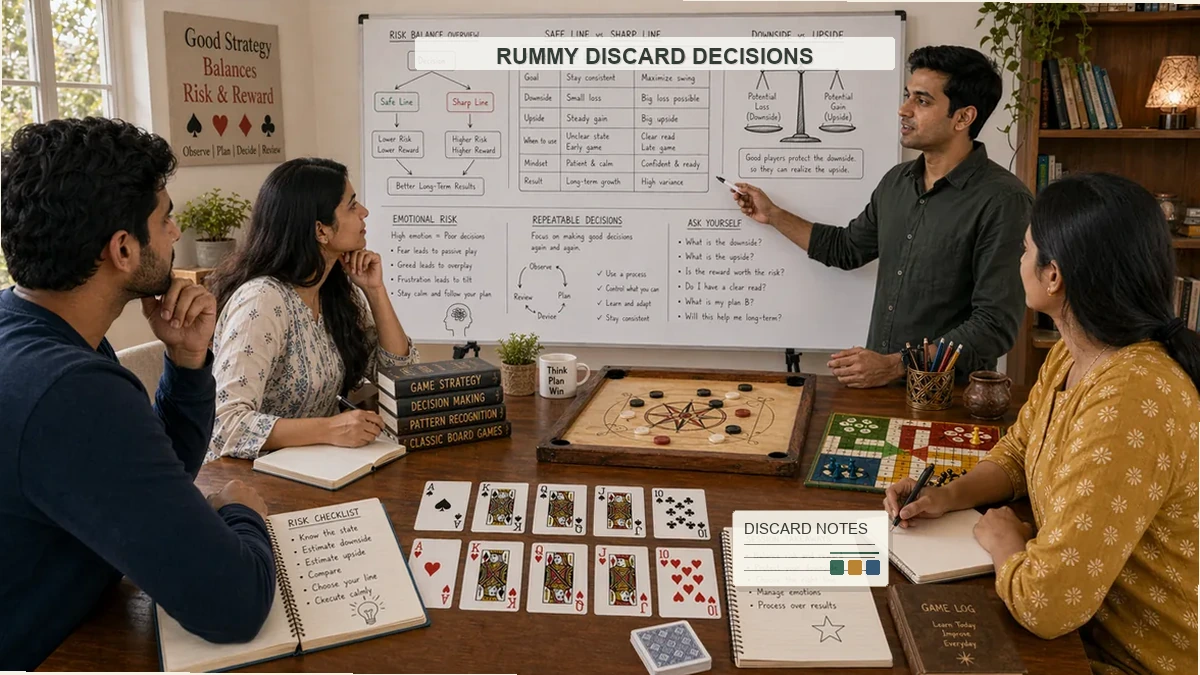
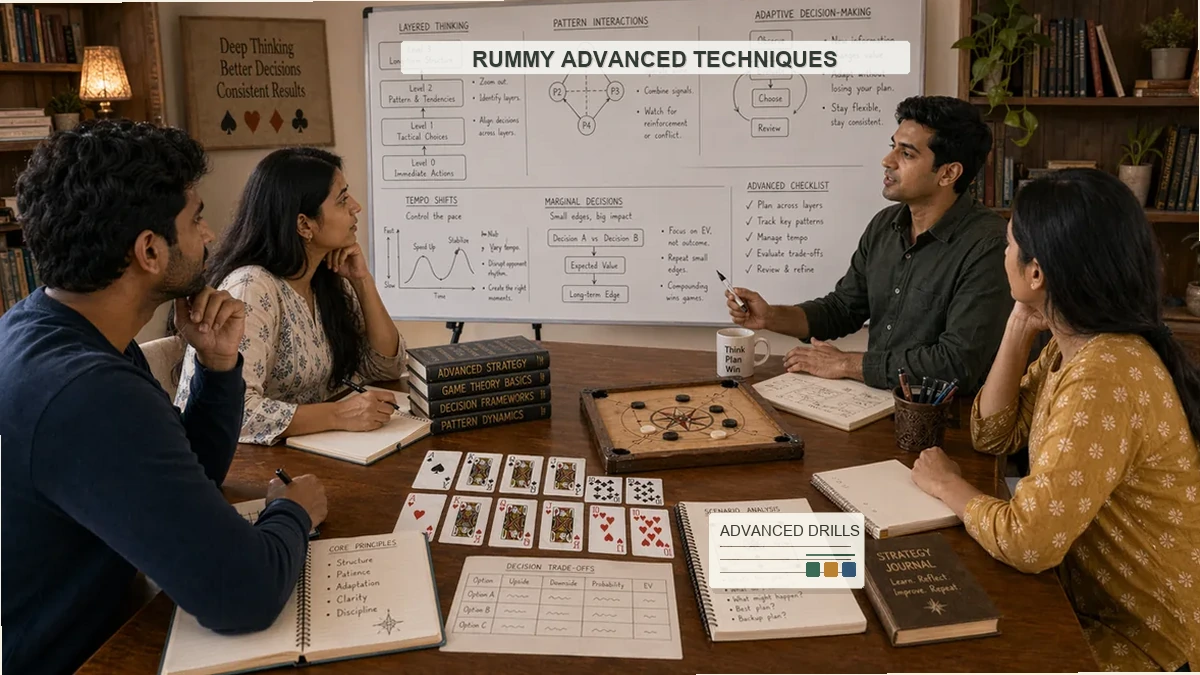
This Rummy page now uses a complete classroom-style teaching set. Each image keeps the same Indian academy photography style while changing the whiteboard lesson, tabletop worksheet, and camera angle for the topic being reviewed.
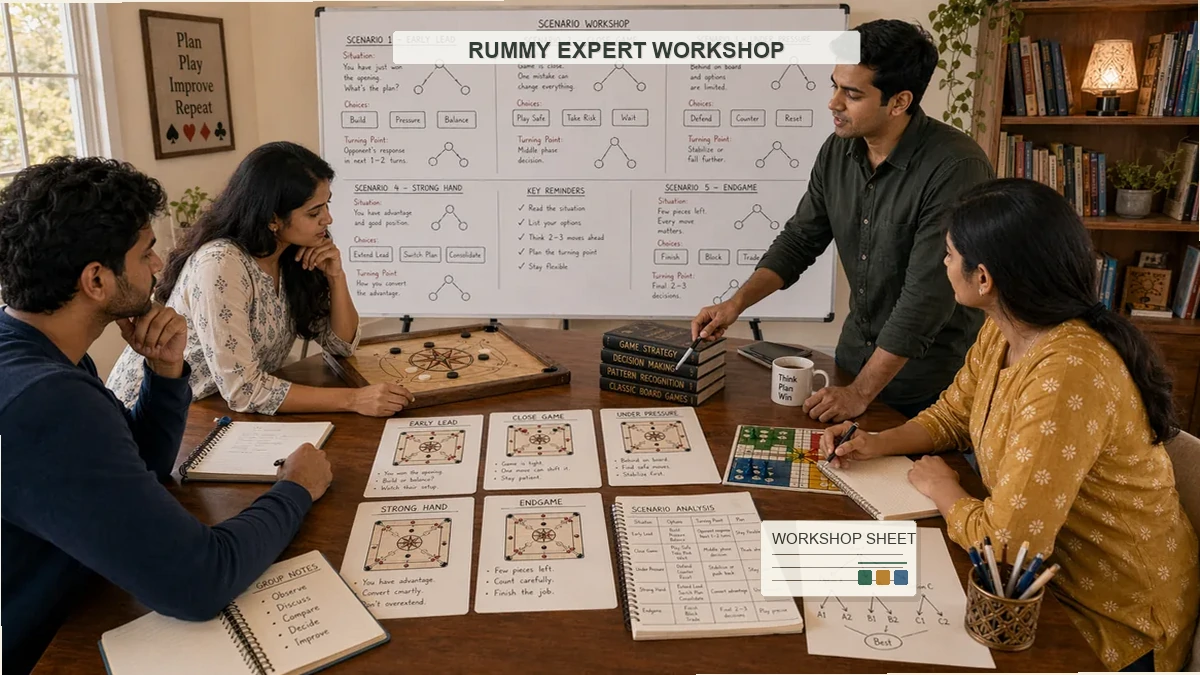

Start With the Shape of the Hand
A useful Rummy review begins before the first dramatic draw. Look at the opening shape: near-sequences, possible sets, isolated high cards, and cards that can work in more than one group. A hand with two flexible sequence paths should be played differently from a hand full of disconnected cards.
The mistake is trying to keep every possibility alive. Review should identify the practical core of the hand, then ask which cards supported that core and which cards only added noise.
Give Reliable Sequences Priority
Sequences give Rummy hands structure. Some formats place special importance on a pure sequence, while others have different declaration details. Either way, connected cards are easier to plan around than isolated cards waiting for one exact draw.
When reviewing a lost hand, check whether a promising sequence was broken too early or whether a weak set idea pulled attention away from a more reliable path.
Use Jokers With a Clear Job
Jokers can make a group look complete, but they can also hide weak planning. If every group depends on a joker, the hand may still be fragile. A steady player first identifies natural groups, then places the joker where it creates the most practical value.
The key question is simple: did the joker solve the hardest problem, or did it get used because the hand had no clear plan yet?
Read Discards Without Over-Reading
The discard pile gives real but limited information. If a player picks a discard, that card probably connects to their hand. If a player repeatedly releases cards from one suit, that suit may be less important to them. These signals help, but they should not become forced predictions.
Good discard awareness means avoiding obvious help to opponents and checking whether your own discards still match your plan.
Common Mistakes
- Chasing too many possible groups instead of building a stable core.
- Using jokers before understanding which natural groups are realistic.
- Holding isolated high cards without a clear path.
- Ignoring what opponents pick from the discard pile.
- Preparing to declare before checking the exact group requirements.
Where to Continue
Use this page as a root review frame for Rummy, then compare it with other card-game review pages to see how different games reward different kinds of awareness.