Poker review
Poker review notes on position, ranges, and pressure decisions.
Poker review is not only about the final cards. It is about whether the decision made sense with the information available at that point in the hand.
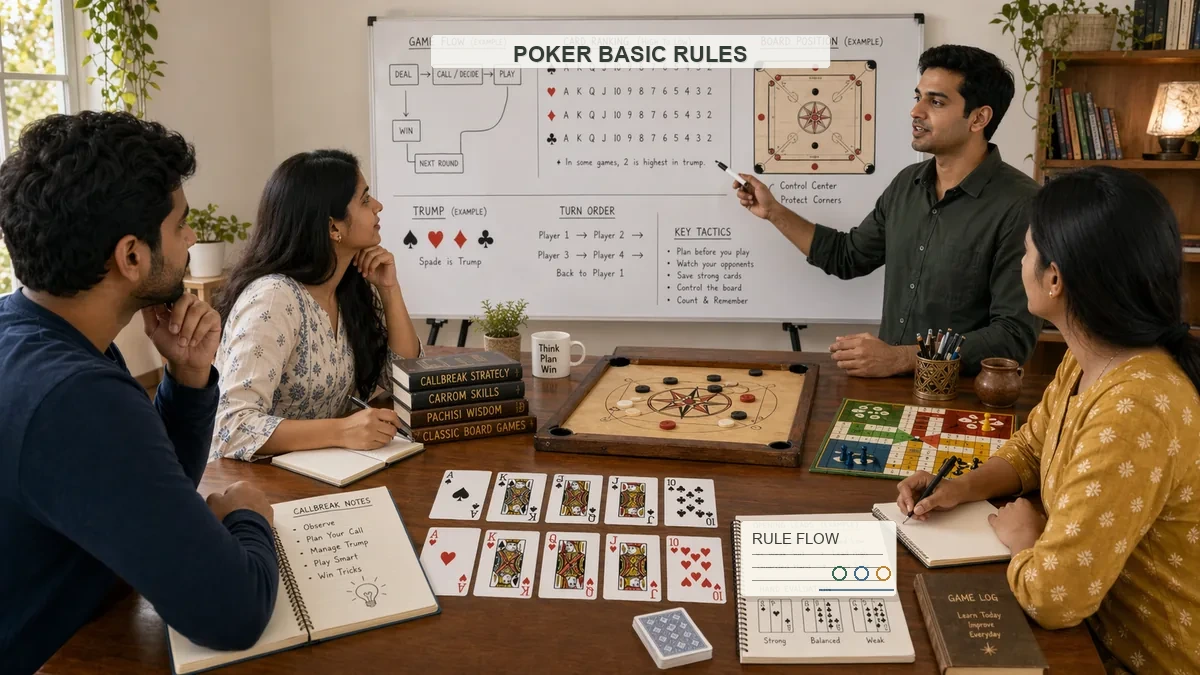
Poker is a family of card games where players make decisions under incomplete information. Different formats have different rules, but many useful reviews focus on position, hand strength, range reading, board texture, action size, and emotional control.
What Changes a Poker Decision
Position
Acting later usually gives more information. Acting earlier often requires tighter discipline because several players still have choices behind you.
Ranges
A range is a set of hands someone could reasonably have. Thinking in ranges is more realistic than guessing one exact hand too early.
Board Texture
Connected visible cards can change hand value quickly. Review whether each new card updated the plan.
Pressure
Pressure is information, not proof. A senior review asks whether the story behind the action was credible.
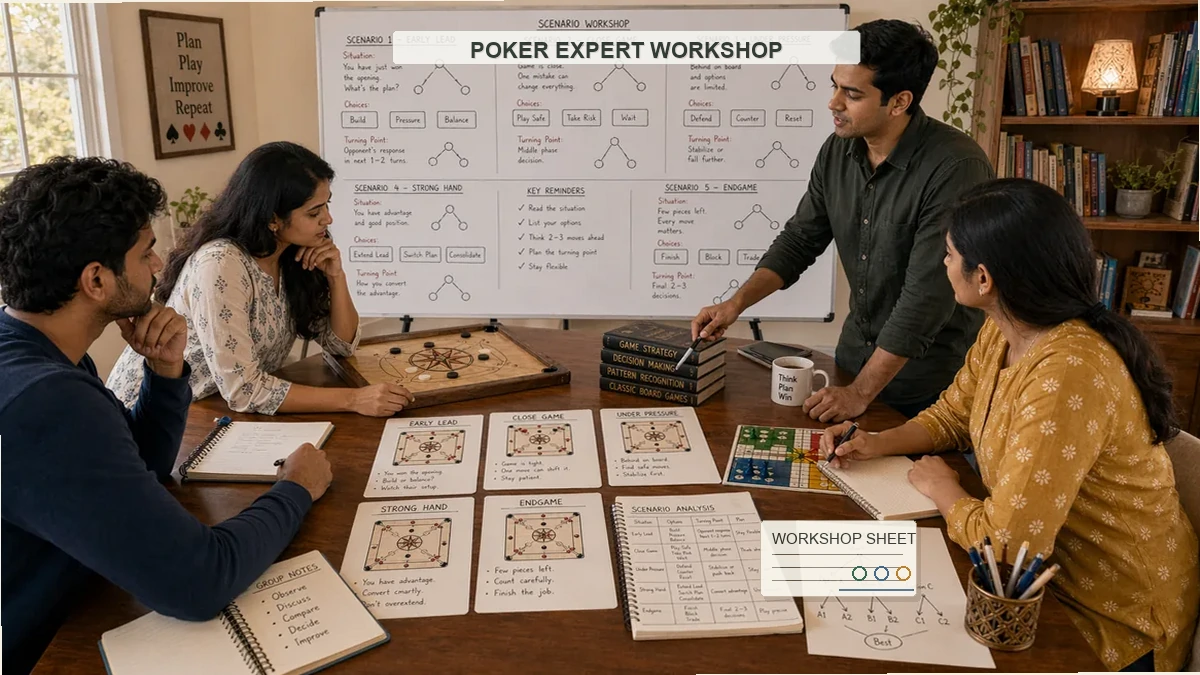
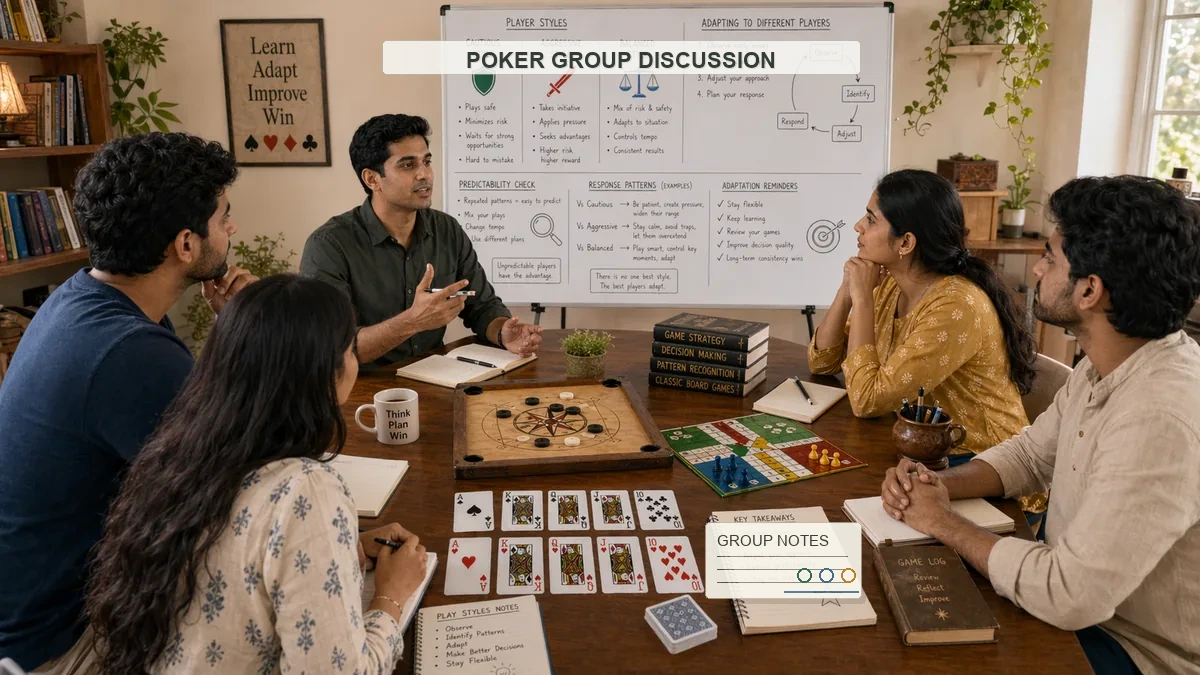
Poker Teaching Image Set
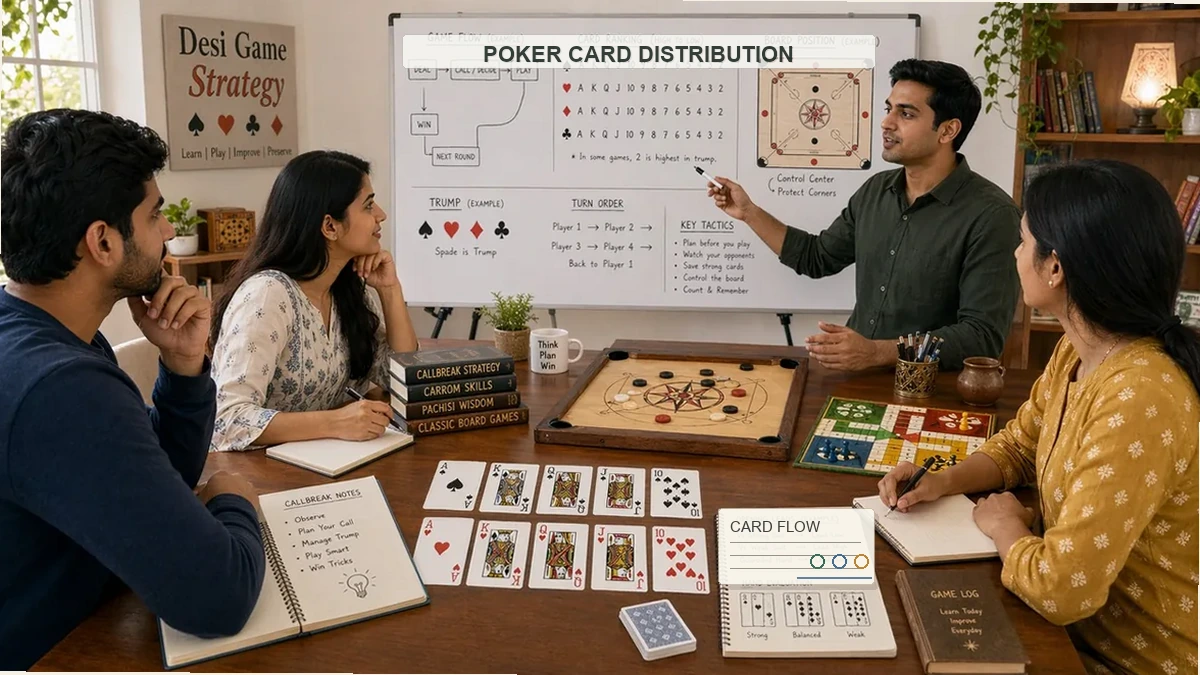
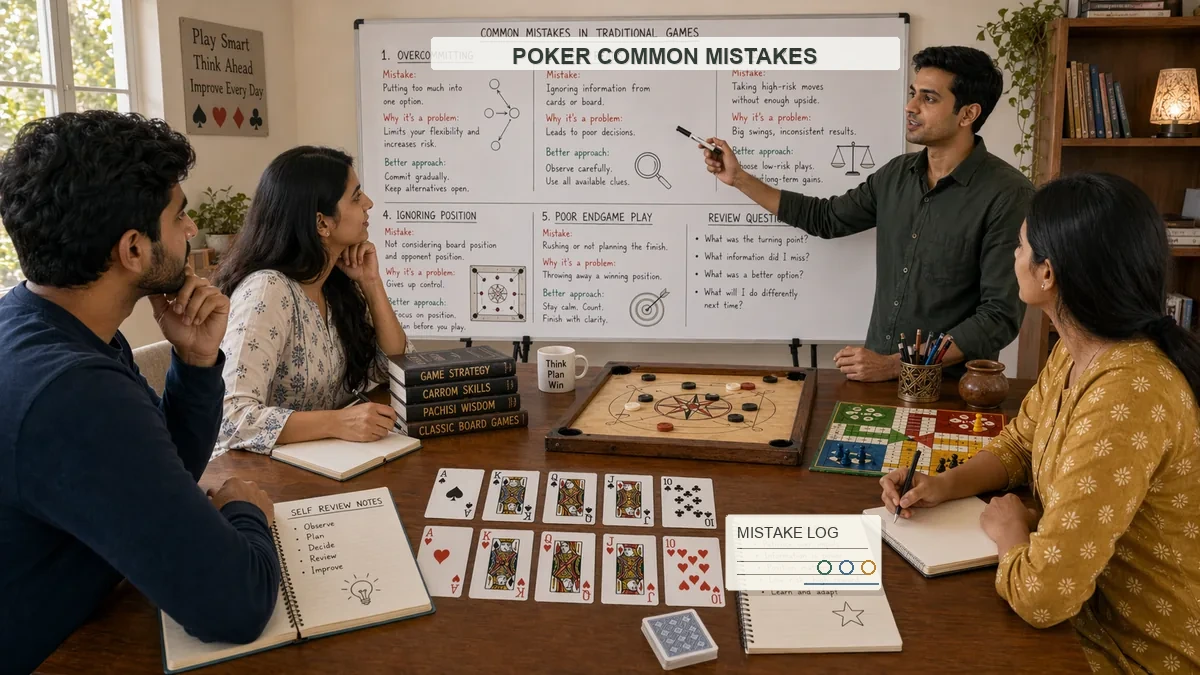
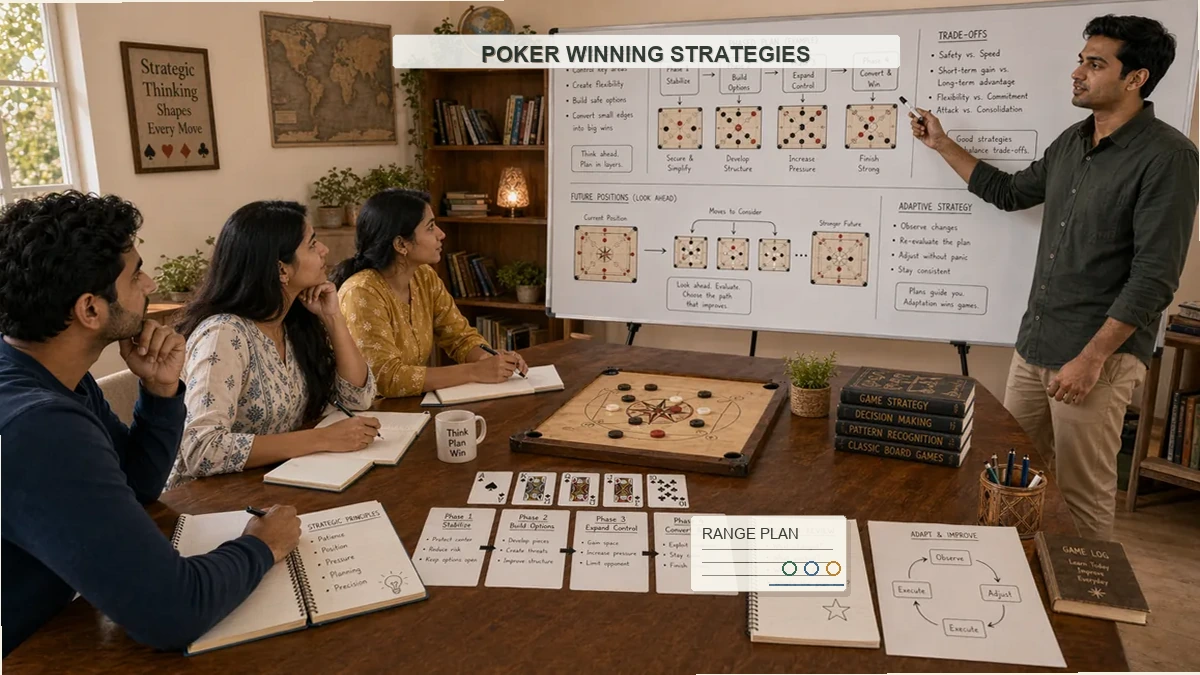
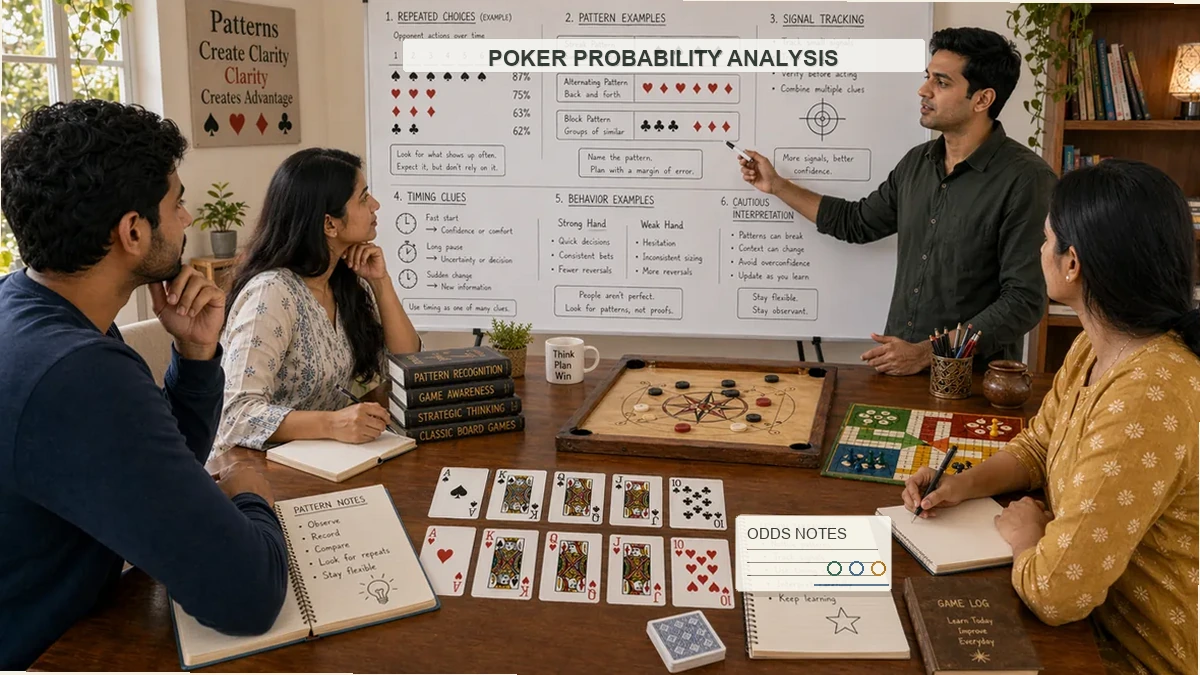
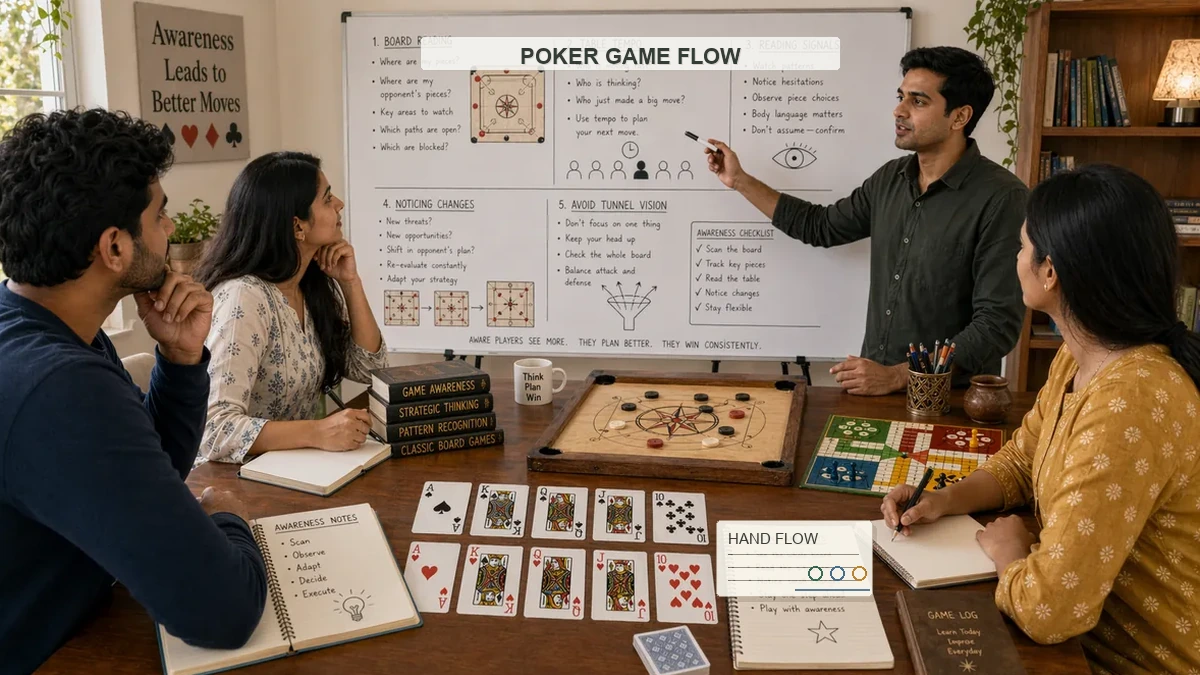
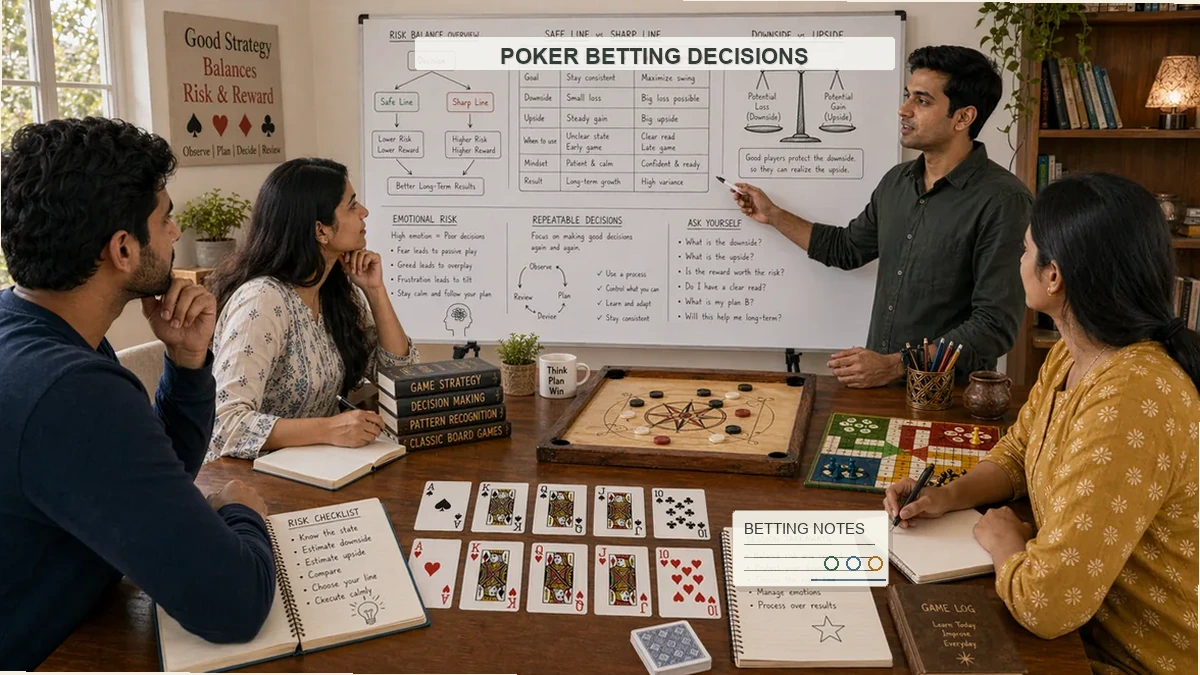
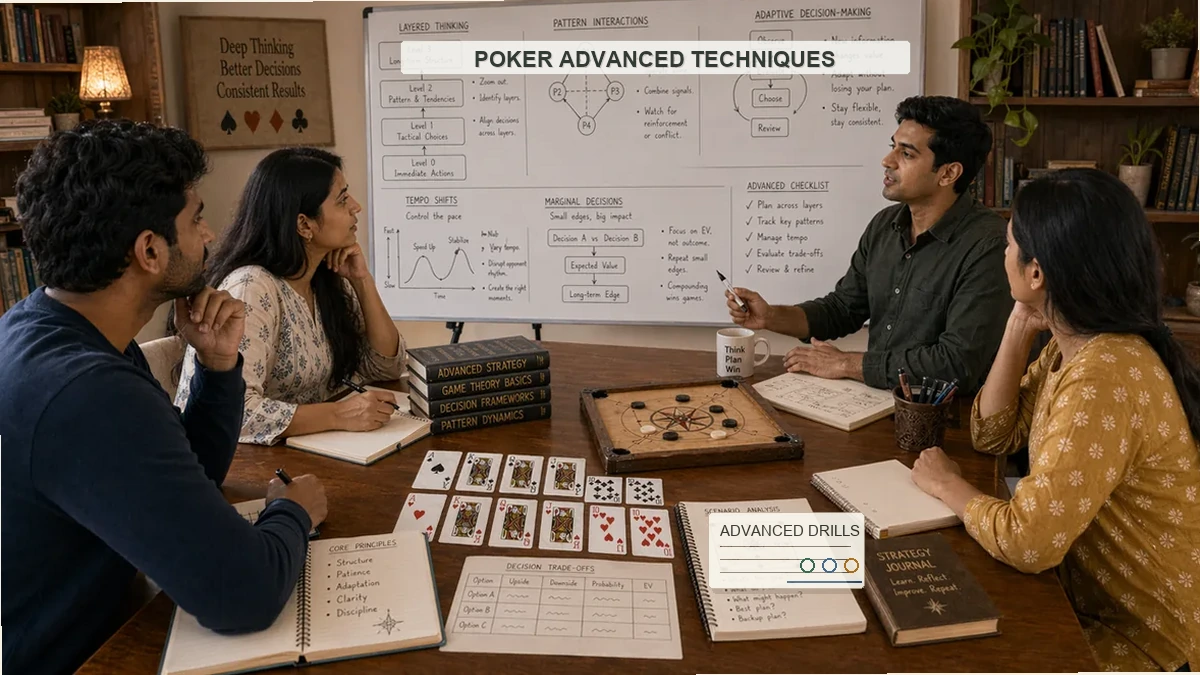
This Poker page now uses a complete classroom-style teaching set. The images share the same academy photography style as the rest of the site while changing the whiteboard lesson, tabletop worksheet, and camera angle for each decision topic.
Separate Result From Decision Quality
A hand can win for weak reasons, and a hand can lose after a reasonable decision. If review only follows the result, it teaches unstable lessons. The better question is whether the decision had a clear reason before all information was known.
That means reviewing position, previous action, likely ranges, board texture, and the goal of the action. The result matters, but it should not erase the process.
Think in Ranges Instead of Single Hands
Range thinking keeps Poker review honest. An opponent rarely has one exact hand from the beginning. Their actions narrow the possibilities. Some lines represent many strong hands. Others include missed draws, medium strength, or position-based pressure.
The value of this approach is balance. It allows uncertainty without giving up structure. Review becomes less about guessing and more about asking which hands reasonably fit the action.
Update the Plan When the Board Changes
Board texture can change quickly. A dry board may give fewer obvious drawing possibilities. A coordinated board can create straight, flush, or two-pair pressure. A hand that looked comfortable earlier may become less comfortable after the next card.
When a hand goes wrong, check whether the player updated their thinking or continued because the earlier plan felt too expensive to abandon.
Review Sizing as Communication
In many Poker formats, action size communicates a plan. It may seek value, protection, control, or pressure. A size without a clear purpose is difficult to defend in review.
The question is not whether a size looked impressive. The question is whether it matched the situation and shaped the next decision in a useful way.
Common Mistakes
- Judging decisions only by whether the hand won or lost.
- Playing the same hand standard from every position.
- Guessing one exact opponent hand too early.
- Ignoring how board texture changes hand value.
- Continuing because of earlier commitment instead of current information.
Where to Continue
Use this page as a root review frame for Poker, then compare it with Rummy, Teen Patti, and decision-making pages to see how different card games handle uncertainty.