Andar Bahar review
Andar Bahar review notes on rules, rhythm, and low-control decisions.
Andar Bahar is easy to understand, but a serious review should stay honest about its limits: simple rules, quick rounds, and very little room for prediction claims.
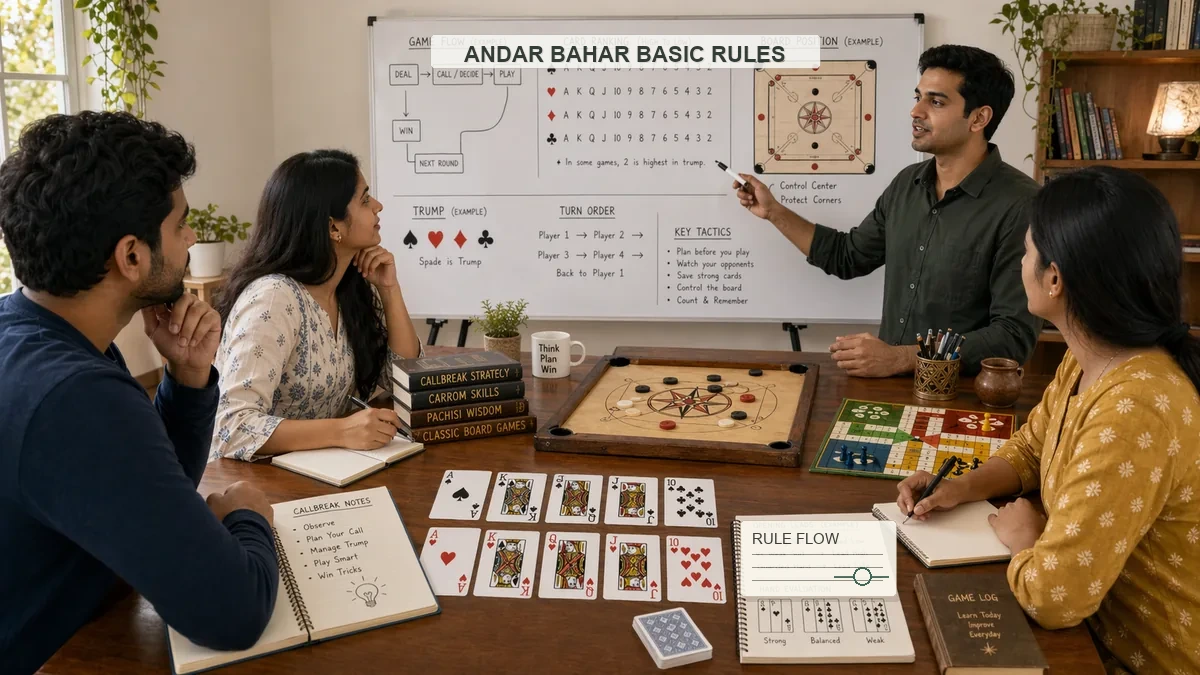
Andar Bahar is a traditional Indian card-matching game. In many common versions, one card is placed as the reference card, then cards are dealt alternately to two sides called Andar and Bahar until a card of the same rank appears.
Andar Bahar Teaching Video
Use this teaching video as the main walkthrough before reviewing the visual lesson set. It helps readers understand the basic round structure first, then compare that explanation with the topic images below.
What Changes an Andar Bahar Review
Round Structure
The game flow is simple: reference card, alternating sides, matching rank. Review begins with understanding that structure clearly.
Low Control
There is no private hand to manage and no multi-step plan to protect. That makes honest expectations important.
Rhythm
Fast and slow rounds can affect patience, but rhythm should not be treated as proof of the next result.
Pattern Stories
Short streaks can feel meaningful. A steady review records them without turning them into certainty.
Andar Bahar Teaching Image Set
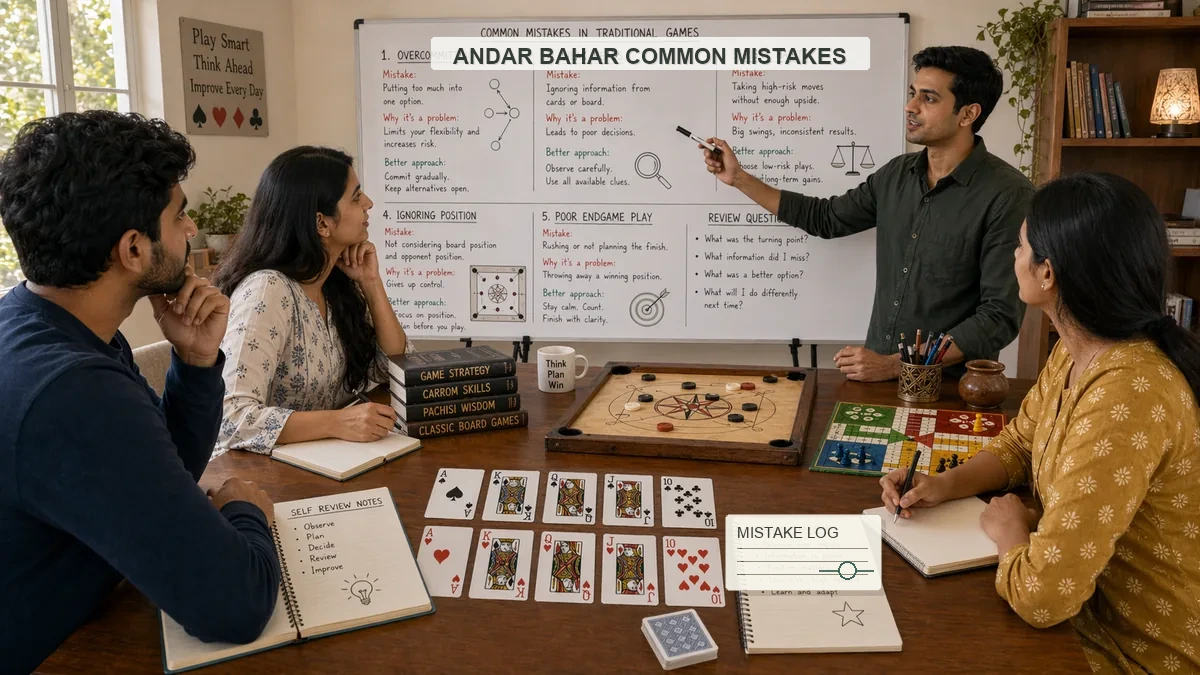
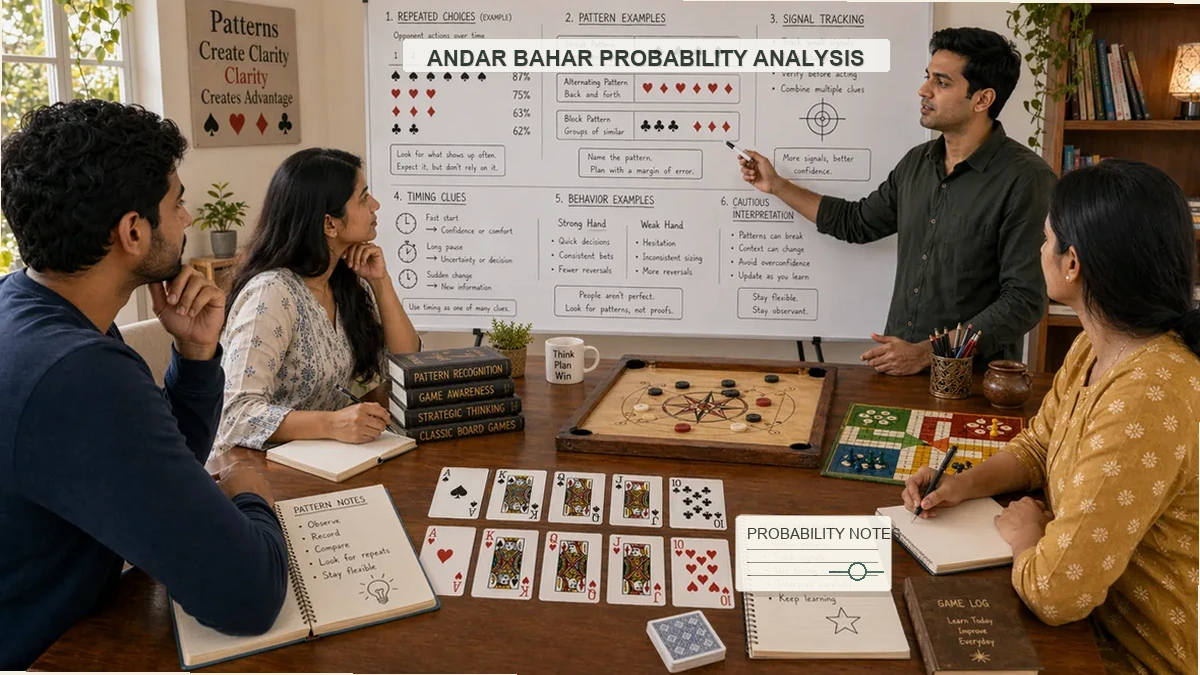
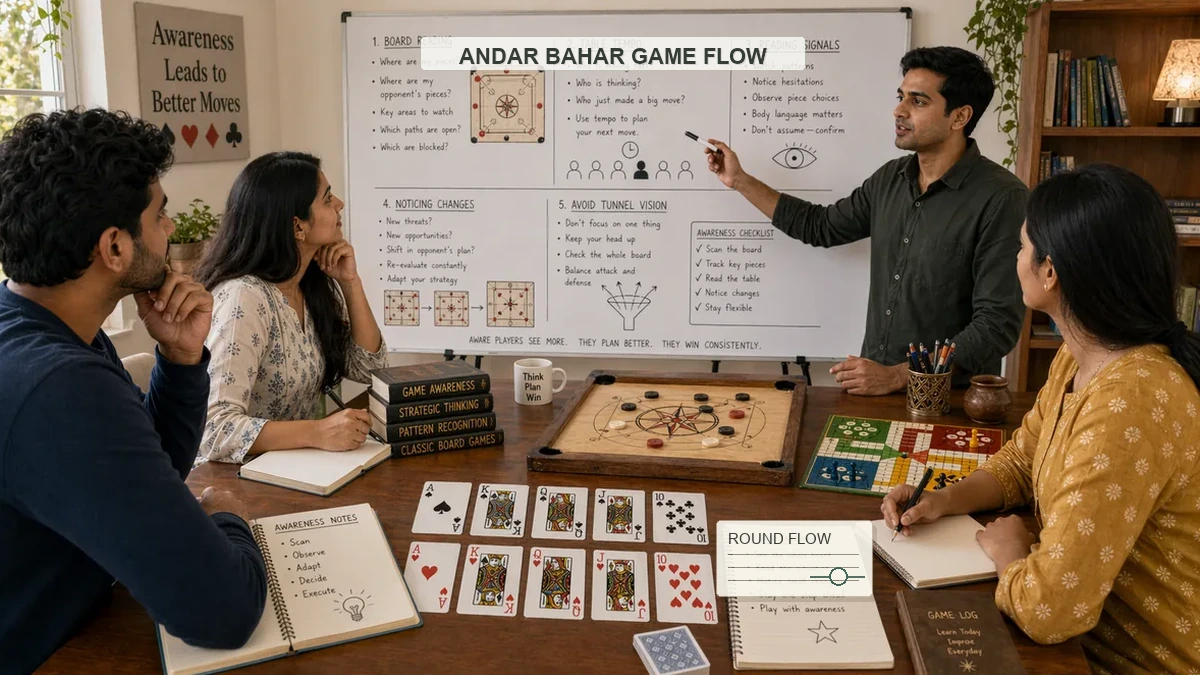
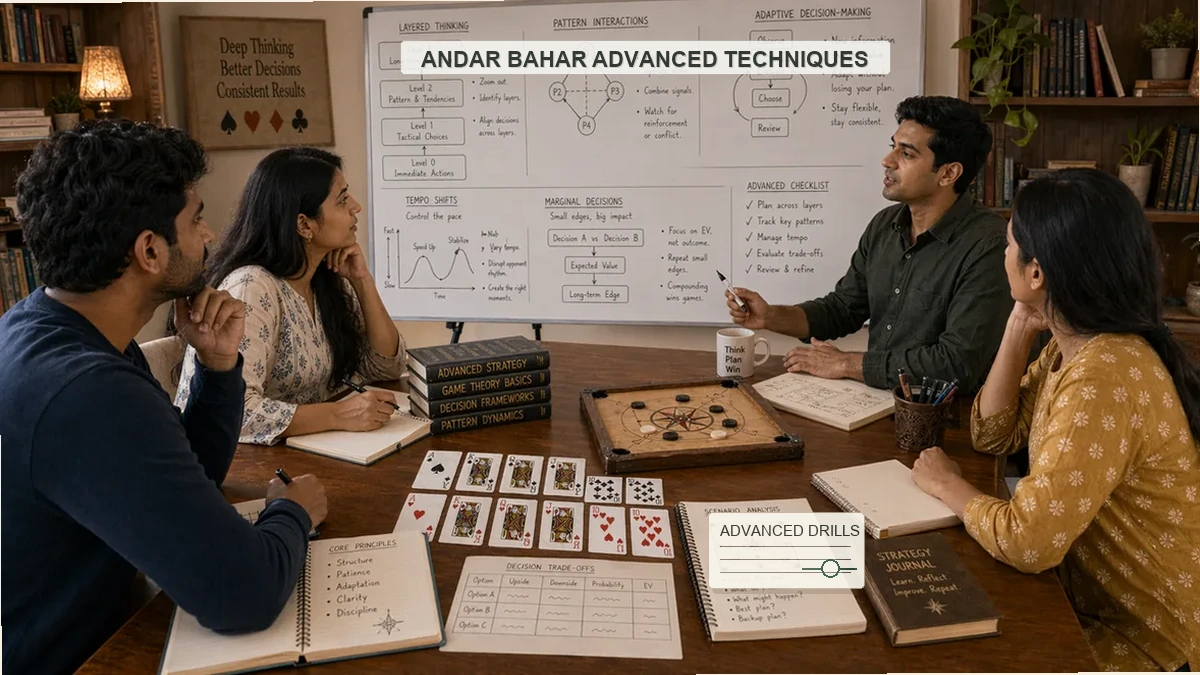
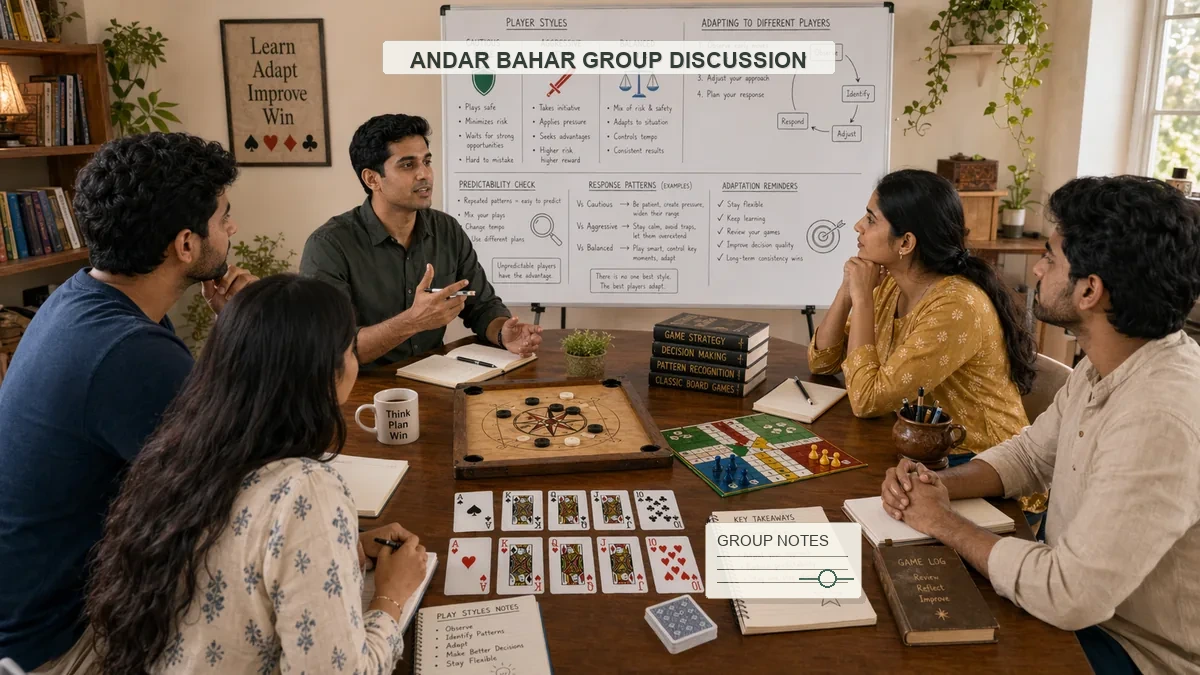
This page uses a fuller classroom-style image set so each review topic has a visual teaching cue: rules, distribution, mistakes, strategy, probability, flow, decision pressure, advanced review, expert workshop notes, and group discussion.




Learn the Basic Round Before Reading Meaning Into It
The rules are straightforward. A reference card appears, then cards are dealt between Andar and Bahar until a matching rank appears. The round ends when that match lands. Because the structure is so simple, there is limited technical strategy to review inside a single round.
That simplicity is not a weakness in the guide. It is the point. A useful explanation should tell beginners what is happening without pretending the game contains hidden control systems.
Recognize the Limits of Control
Andar Bahar does not ask the player to build a hand, manage discards, or read a board over several decision points. Compared with Rummy or Poker, the player has fewer strategic levers.
For review, this shifts the focus from advanced tactics to expectation management. Did the player understand the uncertainty? Did a short sequence change their confidence too much? Did the previous result make the next decision more emotional?
Be Careful With Pattern Stories
Short streaks can create strong feelings. If Andar appears several times, Bahar may start to feel due. If a match arrives quickly, the next round may feel like it should be slower. These reactions are common, but they should not be treated as reliable rules.
A balanced review can record the sequence without over-explaining it. The difference matters: observation is useful, but forced certainty is not.
Use Rhythm as a Mirror for Patience
Rhythm is useful when it helps explain behavior. Fast rounds can make decisions feel automatic. Slow rounds can create frustration. Alternating outcomes can feel more orderly than they really are.
Review the reaction, not just the result. The practical lesson may be that the player became impatient after a run, not that the run predicted anything.
Common Mistakes
- Treating short streaks as proof of what must happen next.
- Creating a detailed explanation after every result.
- Comparing Andar Bahar strategy depth directly with deeper card games.
- Letting a fast sequence change the next decision emotionally.
- Looking for guaranteed prediction systems instead of understanding the limits of control.
Where to Continue
Use this page as a realistic root review frame, then compare it with Rummy, Poker, Teen Patti, and broader card-pattern pages to understand how different games offer different levels of decision depth.